Table of Contents
- Introduction
- Understanding Plant Nutrients
- Signs of Common Nutrient Deficiencies
- Nitrogen Deficiency
- Phosphorus Deficiency
- Potassium Deficiency
- Magnesium Deficiency
- Iron Deficiency
- How to Test Your Soil
- Correcting Nutrient Deficiencies
- Organic Solutions
- Chemical Fertilizers
- Preventing Future Deficiencies
- Tips for Healthy Plant Growth
- Conclusion
1. Introduction
Healthy plants rely on a balanced supply of essential nutrients. When nutrient levels are too low or imbalanced, plants can display visible signs of stress, growth problems, or poor yields. Identifying and correcting nutrient deficiencies is a crucial skill for every gardener, whether you grow vegetables, flowers, or shrubs. This guide will help you recognize common nutrient problems and provide step-by-step solutions to restore plant health.
2. Understanding Plant Nutrients
Plants require a combination of macronutrients and micronutrients for optimal growth:
- Macronutrients: Nitrogen (N), Phosphorus (P), Potassium (K) – needed in large quantities.
- Secondary Nutrients: Calcium (Ca), Magnesium (Mg), Sulfur (S) – required in moderate amounts.
- Micronutrients: Iron (Fe), Manganese (Mn), Zinc (Zn), Copper (Cu), Boron (B), Molybdenum (Mo) – needed in trace amounts.
Each nutrient plays a specific role in plant growth. For example, nitrogen supports leafy growth, phosphorus encourages strong root development, and potassium improves overall plant resilience.
3. Signs of Common Nutrient Deficiencies
Nitrogen Deficiency
- Symptoms: Yellowing of older leaves, stunted growth, pale green color.
- Affected Plants: Vegetables, leafy greens, ornamental plants.
- Solution: Apply nitrogen-rich fertilizers like composted manure, blood meal, or a balanced N-P-K fertilizer.
Phosphorus Deficiency
- Symptoms: Dark green or purplish leaves, slow growth, poor flowering or fruiting.
- Affected Plants: Root crops, flowering plants, fruiting vegetables.
- Solution: Add bone meal, rock phosphate, or phosphorus-rich fertilizers to the soil.
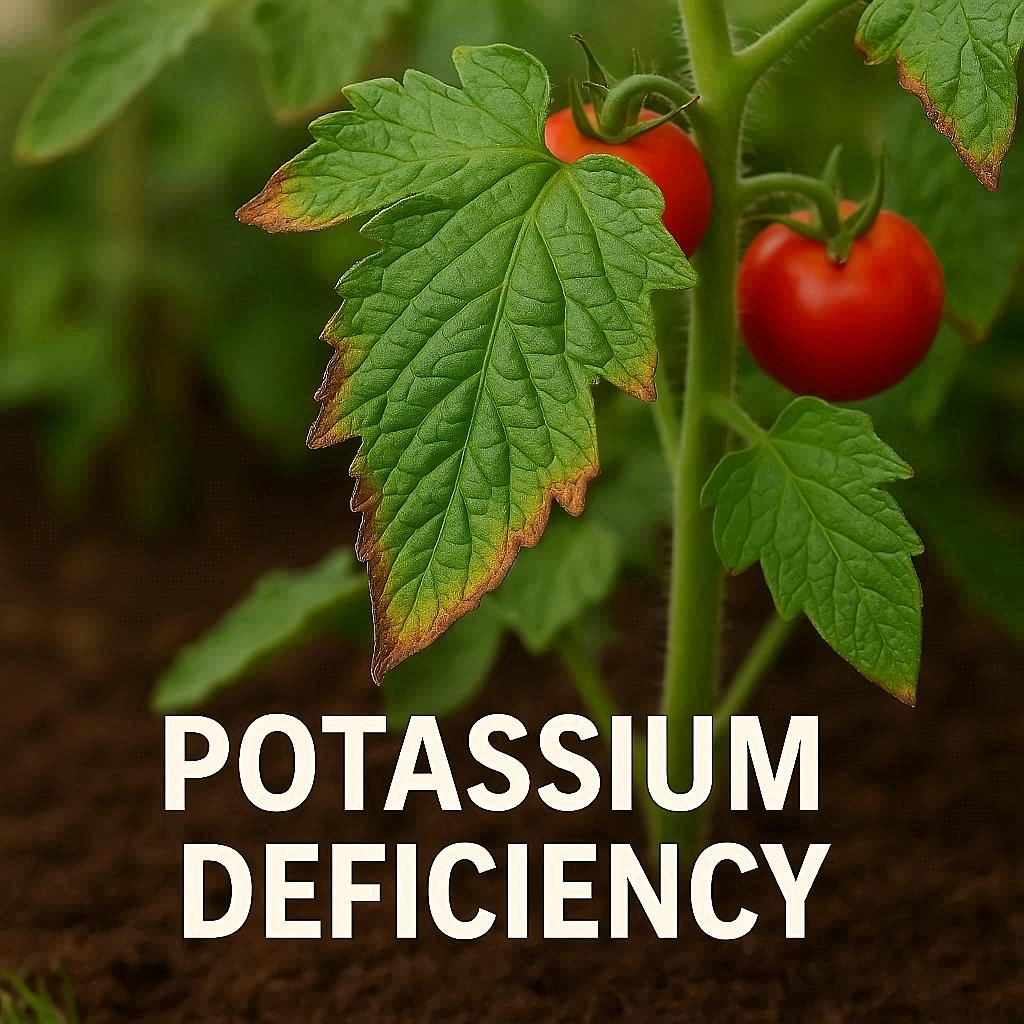
Potassium Deficiency
- Symptoms: Yellowing or browning at leaf edges, weak stems, reduced resistance to pests and diseases.
- Affected Plants: Fruit trees, vegetables, flowers.
- Solution: Use potassium sulfate, wood ash, or kelp meal to restore potassium levels.
Magnesium Deficiency
- Symptoms: Yellowing between leaf veins while veins remain green (interveinal chlorosis), older leaves affected first.
- Affected Plants: Tomatoes, peppers, roses, garden vegetables.
- Solution: Apply Epsom salts (magnesium sulfate) to soil or as a foliar spray.
Iron Deficiency
- Symptoms: Yellowing of young leaves with green veins (chlorosis), stunted growth.
- Affected Plants: Acid-loving plants like azaleas, camellias, blueberries.
- Solution: Adjust soil pH if too alkaline and apply chelated iron to soil or as a foliar spray.
4. How to Test Your Soil
Testing soil is the most reliable way to identify nutrient deficiencies:
- DIY Soil Tests: Simple kits can measure pH, nitrogen, phosphorus, and potassium levels.
- Professional Testing: Lab tests provide a full nutrient profile and specific recommendations.
- Observation: Combine test results with visual signs for accurate diagnosis.
5. Correcting Nutrient Deficiencies
Organic Solutions
- Compost: Improves soil structure and provides a slow-release nutrient source.
- Manures: Chicken, cow, or horse manure are rich in nitrogen and other nutrients.
- Mulching: Adds organic matter, retains moisture, and gradually enriches soil.
Chemical Fertilizers
- Use fertilizers according to package instructions to avoid over-fertilization.
- Choose N-P-K ratios based on soil test results.
- Liquid fertilizers provide a fast boost for immediate deficiency correction.
6. Preventing Future Deficiencies
- Rotate Crops: Different plants consume nutrients differently.
- Add Organic Matter: Regular composting maintains soil fertility.
- Monitor Soil pH: Correct pH ensures nutrient availability.
- Regular Fertilization: Balanced fertilization schedules help maintain nutrient levels.
7. Tips for Healthy Plant Growth
- Water plants adequately to facilitate nutrient absorption.
- Avoid compacted soil to improve root access to nutrients.
- Observe plants regularly for early signs of deficiency.
- Incorporate companion planting to naturally enrich the soil.
8. Conclusion
Identifying and fixing nutrient deficiencies is essential for healthy, productive gardens. By understanding the roles of different nutrients, observing plant symptoms, testing your soil, and applying appropriate solutions, gardeners can prevent stress and boost plant growth. Combining these practices with preventive strategies ensures long-term garden health and abundant yields.