Table of Contents
- Introduction
- Understanding Slugs and Snails
- Signs of Infestation
- Preventive Measures
- Organic Slug and Snail Control Methods
- Homemade Barriers and Traps
- Beneficial Predators
- Plant Selection and Companion Planting
- Maintenance and Monitoring
- Conclusion
1. Introduction
Slugs and snails are among the most common garden pests, notorious for damaging vegetables, flowers, and ornamental plants. While chemical pesticides can be effective, they often harm beneficial insects and the environment. Organic methods offer a safe and sustainable way to protect your garden while maintaining plant health. This guide explores practical and proven organic slug and snail control methods that work for both small and large gardens.
2. Understanding Slugs and Snails
Before tackling the problem, it’s important to understand your pests:
- Slugs and snails are mollusks that feed on leaves, stems, and fruits, leaving irregular holes and slime trails.
- They are most active at night or during damp, cloudy conditions, making early detection essential.
- Moisture-rich areas and dense vegetation provide ideal habitats, so proper garden management can reduce infestation risks.

3. Signs of Infestation
Recognizing the presence of slugs and snails early can prevent extensive damage:
- Holes in leaves, often with ragged edges.
- Slime trails on soil, plant stems, or garden paths.
- Damage to seedlings and tender plants, especially during wet conditions.
- Nighttime sightings of slugs and snails hiding under rocks, pots, or dense foliage.
4. Preventive Measures
Prevention is key to organic pest management:
- Keep garden beds clean and free of debris where slugs and snails hide.
- Water in the morning rather than evening to reduce moisture at night.
- Space plants adequately to allow airflow and reduce damp conditions.
- Remove old leaves, mulch, and weeds that provide shelter for mollusks.
5. Organic Slug and Snail Control Methods
Several organic solutions effectively deter slugs and snails without harming the ecosystem:
- Iron Phosphate Baits: Safe for pets and wildlife, this bait attracts and kills slugs while enriching the soil.
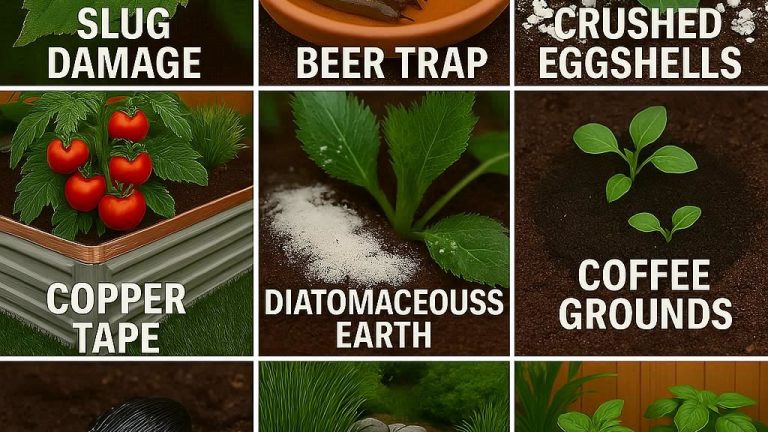
- Diatomaceous Earth: Sprinkled around plants, this natural powder damages the pests’ protective coating, causing dehydration.
- Coffee Grounds: Slugs avoid crawling over coarse coffee grounds, making them a simple barrier.
- Eggshells and Sand: Crushed eggshells or coarse sand create rough surfaces that discourage slugs and snails from crossing.
6. Homemade Barriers and Traps
DIY traps and barriers are affordable and effective:
- Beer Traps: A shallow container filled with beer attracts and drowns slugs overnight.
- Board or Tarp Traps: Lay damp boards or cardboard in the garden; check underneath in the morning and remove slugs.
- Copper Tape: Placing copper tape around raised beds or plant pots gives slugs a mild electric shock, deterring them.
7. Beneficial Predators
Encouraging natural predators is a sustainable method of control:
- Ground Beetles and Predatory Insects: Attract with companion plants and ground cover.
- Frogs, Toads, and Birds: Provide small water sources and shelter to attract these natural enemies.
- Hedgehogs: In some regions, hedgehogs feed on slugs and snails, helping reduce populations organically.
8. Plant Selection and Companion Planting
Certain plants naturally repel slugs and snails:
- Strong-Smelling Herbs: Plants like rosemary, sage, thyme, and fennel deter mollusks.
- Companion Planting: Planting slug-resistant crops such as garlic, chives, and onions near vulnerable plants creates a natural barrier.
- Sacrificial Plants: Planting lettuce or nasturtium in designated areas draws slugs away from main crops.
9. Maintenance and Monitoring
Continuous care ensures long-term success:
- Check garden beds daily during wet seasons and after watering.
- Replace or refresh barriers, baits, and traps regularly.
- Rotate plants to avoid creating slug-friendly environments.
- Record pest activity to identify hotspots and adjust strategies accordingly.
10. Conclusion
Organic slug and snail control requires a combination of preventive measures, DIY barriers, natural predators, and strategic plant choices. By using environmentally friendly methods, gardeners can protect their plants while maintaining a balanced ecosystem. Consistent monitoring and early action ensure that slugs and snails do not become a persistent problem, allowing your garden to thrive naturally.


