Table of Contents
- Introduction
- Choosing the Right Tomato Variety
- Selecting Containers and Soil
- Planting Tomato Seeds
- Providing Proper Light and Temperature
- Watering and Fertilizing Your Tomatoes
- Transplanting Seedlings to Larger Pots
- Pruning and Supporting Tomato Plants
- Common Problems and How to Solve Them
- Harvesting Tomatoes
- Conclusion
1. Introduction
Growing tomatoes in pots is an excellent option for gardeners with limited space or urban balconies. Starting from seed allows you to select from a wide variety of tomato types, including heirlooms, cherry tomatoes, and disease-resistant hybrids. With proper care, tomatoes grown in pots can yield a bountiful harvest and add fresh, juicy flavor to your meals. This guide provides step-by-step instructions for beginners and intermediate gardeners, helping you grow healthy tomato plants successfully.
2. Choosing the Right Tomato Variety
Selecting the right variety is crucial for container gardening:
- Determinate vs. Indeterminate: Determinate varieties grow to a fixed size and produce fruit all at once, making them ideal for small pots. Indeterminate varieties continue growing and fruiting throughout the season, requiring larger containers and support.
- Cherry and Patio Tomatoes: Smaller tomatoes are easier to manage in containers and yield abundantly.
- Disease Resistance: Look for varieties resistant to common tomato diseases such as blight or fusarium wilt.
3. Selecting Containers and Soil
Proper containers and soil are essential for healthy tomato plants:
- Container Size: Use pots that are at least 12 inches deep for determinate varieties and 18 inches or larger for indeterminate types.
- Drainage: Ensure pots have drainage holes to prevent root rot.
- Soil Mix: Use a high-quality potting mix enriched with compost. Avoid garden soil, which can compact and limit root growth.
4. Planting Tomato Seeds
Follow these steps to start seeds successfully:
- Fill seed trays or small pots with seed-starting mix.
- Sow seeds about ¼ inch deep.
- Lightly cover with soil and gently water.
- Keep the soil consistently moist but not soggy.
- Label your seeds with the variety and planting date for easy tracking.
5. Providing Proper Light and Temperature
Tomato seedlings require warmth and light to thrive:
- Temperature: Maintain soil temperature around 70–75°F (21–24°C) for germination.
- Light Requirements: Provide 12–16 hours of light daily using a sunny window or grow lights.
- Humidity: Cover trays with a clear dome or plastic wrap to retain moisture until seedlings emerge.
6. Watering and Fertilizing Your Tomatoes
Balanced watering and feeding ensure strong growth:
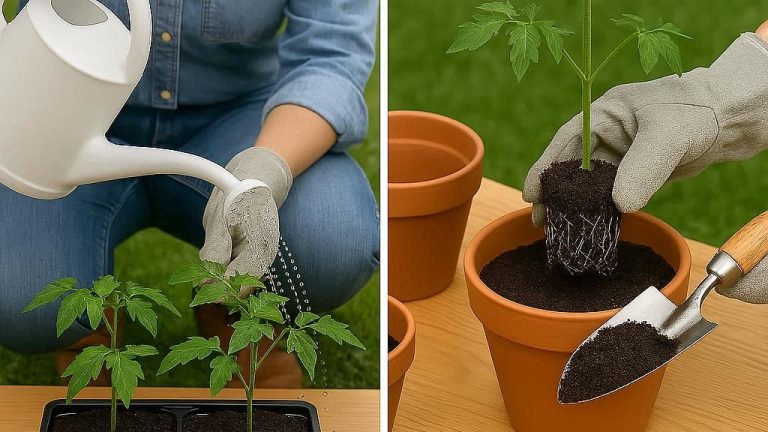
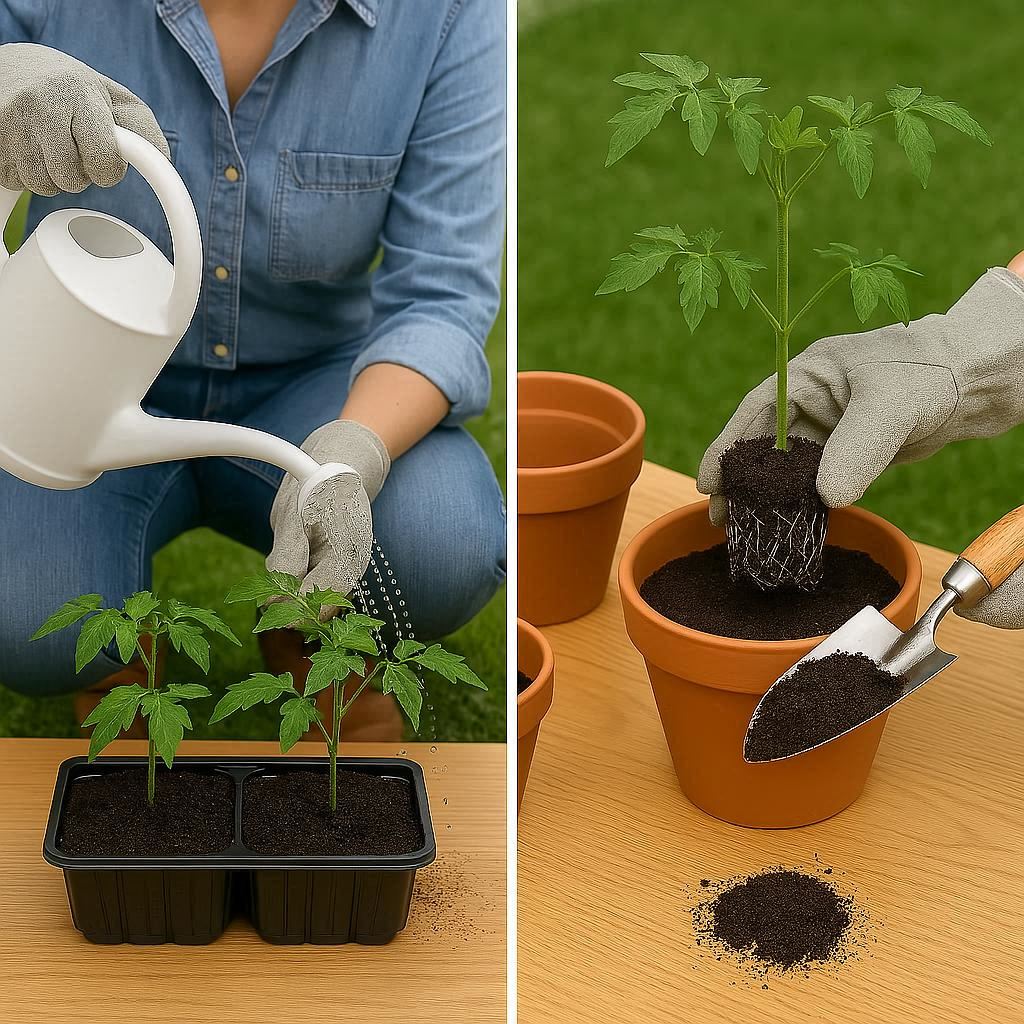
- Watering: Keep the soil consistently moist. Water at the base to avoid wetting leaves, which can lead to fungal issues.
- Fertilizing: Once seedlings develop their first true leaves, apply a diluted liquid fertilizer every 1–2 weeks. Use a balanced formula or one slightly higher in phosphorus to promote root growth.
7. Transplanting Seedlings to Larger Pots
When seedlings develop 2–3 sets of true leaves, they are ready for larger containers:
- Harden off seedlings by gradually exposing them to outdoor conditions.
- Choose a pot that allows roots to spread comfortably.
- Plant seedlings deep, covering part of the stem to encourage strong root development.
- Mulch the top of the soil to retain moisture and regulate temperature.
8. Pruning and Supporting Tomato Plants
Proper support and pruning help plants grow healthy and productive:
- Staking or Caging: Use stakes, tomato cages, or trellises to keep plants upright and prevent sprawling.
- Pruning: Remove suckers (small shoots between main stem and branches) for indeterminate varieties to improve airflow and fruit quality.
- Leaf Management: Trim lower leaves to reduce the risk of soil-borne diseases.
9. Common Problems and How to Solve Them
Even container-grown tomatoes can face challenges:
- Yellowing Leaves: Often caused by overwatering or nutrient deficiencies; adjust watering and feed with balanced fertilizer.
- Blossom End Rot: Usually due to calcium deficiency or uneven watering; ensure consistent soil moisture and consider adding crushed eggshells or calcium supplements.
- Pests: Watch for aphids, whiteflies, and spider mites; remove pests manually or use organic insecticidal soap.
10. Harvesting Tomatoes
Know when to pick your tomatoes for the best flavor:
- Ripeness: Tomatoes are ready when fully colored and slightly soft to the touch.
- Frequent Harvesting: Regularly picking ripe tomatoes encourages continued production.
- Handling: Avoid pulling fruit aggressively; gently twist or use scissors to prevent plant damage.
11. Conclusion
Growing tomatoes in pots from seed is both rewarding and practical, even for gardeners with limited space. With careful variety selection, proper container choice, attentive watering, and pruning, you can enjoy a bountiful harvest of fresh, flavorful tomatoes. Starting seeds indoors allows you to customize your garden with preferred varieties and ensures strong, healthy plants ready for your balcony or patio.