Table of Contents
- Introduction
- Understanding Composting Basics
- Choosing the Right Composting Location
- Gathering Compostable Materials
- Layering and Building Your Compost Pile
- Maintaining Your Compost: Turning and Moisture
- Accelerating Composting with Natural Additives
- Harvesting and Using Your Compost
- Troubleshooting Common Compost Issues
- Conclusion
1. Introduction
Composting is one of the most effective ways to recycle organic waste while enriching your garden soil naturally. Making your own nutrient-rich compost at home reduces kitchen and garden waste, improves soil health, and promotes sustainable gardening practices. Whether you have a small backyard or a large garden, creating compost is accessible, cost-effective, and environmentally friendly.
2. Understanding Composting Basics
Before starting, it is essential to understand the fundamental principles of composting:
- Balance of Green and Brown Materials: Green materials provide nitrogen (vegetable scraps, coffee grounds, grass clippings), while brown materials provide carbon (leaves, cardboard, straw). A balanced ratio ensures faster decomposition.
- Aeration: Oxygen is necessary for aerobic decomposition. Proper turning of the pile prevents bad odors and accelerates composting.
- Moisture: The pile should be as damp as a wrung-out sponge. Too dry slows down decomposition; too wet can lead to smell issues.
3. Choosing the Right Composting Location
Location is key for effective composting:
- Shaded Spot: Choose a location that is partially shaded to prevent the pile from drying out.
- Accessible Area: Ensure it is easy to reach for adding materials and turning the compost.
- Drainage: Avoid areas prone to flooding or poor drainage. A level ground with good drainage ensures healthy decomposition.
4. Gathering Compostable Materials
You can compost a wide variety of organic materials:
- Green Materials (Nitrogen-Rich): Fruit and vegetable scraps, coffee grounds, tea leaves, fresh grass clippings.
- Brown Materials (Carbon-Rich): Dry leaves, shredded newspaper, cardboard, straw, small branches.
- Optional Additives: Eggshells, crushed nutshells, and small amounts of garden soil can introduce beneficial microbes.
Tips: Avoid meat, dairy, oily foods, or pet waste as they can attract pests and create odors.
5. Layering and Building Your Compost Pile
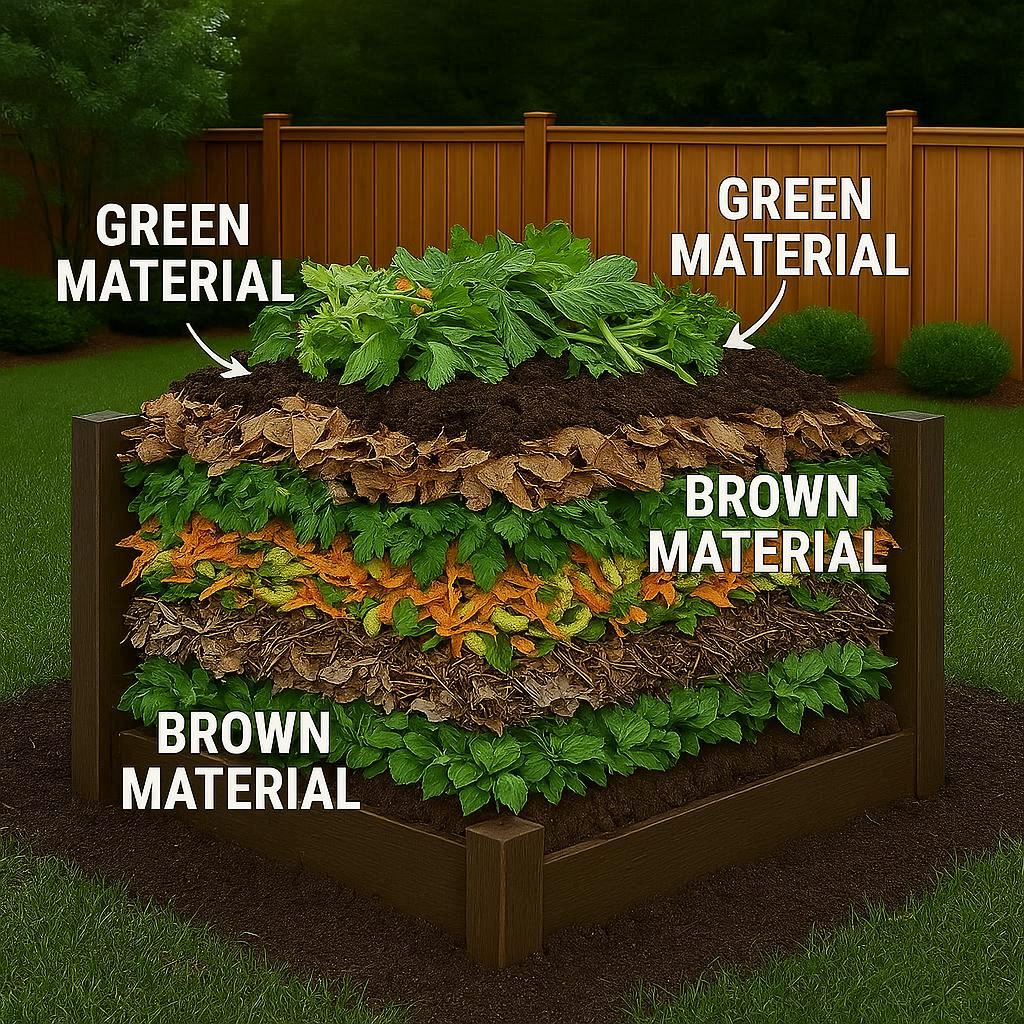
Proper layering improves decomposition:
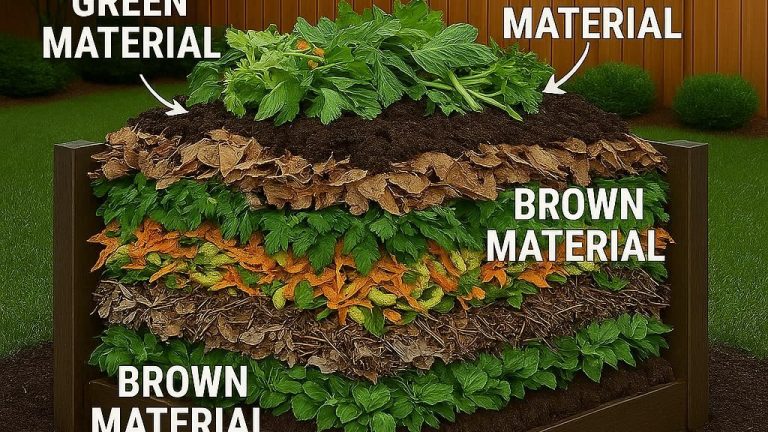
- Start with a layer of coarse brown materials like small branches or straw for drainage.
- Alternate layers of green and brown materials, aiming for a ratio of roughly 2:1 brown to green.
- Chop or shred larger pieces to speed up decomposition.
- Ensure the pile is at least 3 feet wide and tall enough to retain heat for microbial activity.
6. Maintaining Your Compost: Turning and Moisture
Regular maintenance ensures nutrient-rich compost:
- Turning: Mix or turn the pile every 1-2 weeks to aerate and distribute moisture and heat evenly.
- Moisture Check: The pile should be damp but not soggy. Water lightly if too dry, or add dry browns if too wet.
- Temperature Monitoring: A healthy compost pile can reach 130–160°F, indicating active decomposition.
7. Accelerating Composting with Natural Additives
You can speed up the process and enhance compost quality:
- Compost Starters: Sprinkle finished compost or garden soil to introduce beneficial microbes.
- Manure: Well-rotted animal manure adds nitrogen and accelerates decomposition.
- Worms: Red wigglers can be added for vermicomposting to produce nutrient-dense compost.
- Crushed Eggshells or Coffee Grounds: Provide additional minerals and nitrogen.
8. Harvesting and Using Your Compost
Your compost is ready when it is dark, crumbly, and has an earthy smell:
- Sifting: Remove any undecomposed large items and return them to the pile.
- Application: Spread compost around vegetable beds, flower gardens, or mix with potting soil.
- Top Dressing: Use as a mulch around plants to retain moisture and improve soil fertility.
9. Troubleshooting Common Compost Issues
- Odor Problems: Usually caused by too much green material or poor aeration. Turn pile and add browns.
- Slow Decomposition: Shred larger pieces, maintain moisture, and ensure proper green-to-brown ratio.
- Pests: Avoid meat and oily foods; cover food scraps with a brown layer.
- Excess Moisture: Add dry leaves or shredded cardboard to absorb water and improve airflow.
10. Conclusion
Making your own nutrient-rich compost at home is a rewarding and environmentally friendly gardening practice. By carefully selecting materials, layering properly, maintaining moisture and aeration, and troubleshooting common problems, you can produce high-quality compost that nourishes your garden naturally. Composting reduces waste, enhances soil fertility, and supports sustainable vegetable gardening, making your garden healthier and more productive year after year.