Table of Contents
- Introduction
- Why Choose Pet-Safe Houseplants
- Popular Pet-Safe Indoor Plants
- How to Arrange Pet-Safe Plants at Home
- Tips for Caring for Pet-Safe Houseplants
- Combining Pet-Safe Plants with Home Decor
- DIY Pet-Safe Plant Projects
- Safety Tips and Common Mistakes
- Conclusion
1. Introduction
Houseplants bring life, color, and freshness to your home. However, for pet owners, some popular indoor plants can be harmful to cats and dogs. Creating a green indoor space that is both beautiful and safe is essential for any pet-friendly home. With the right selection of pet-safe houseplants, you can enjoy a lush indoor environment without worrying about your furry friends.
2. Why Choose Pet-Safe Houseplants
Choosing pet-safe plants is important for several reasons:
- Health Protection: Cats and dogs often nibble on leaves. Pet-safe plants prevent poisoning and digestive issues.
- Peace of Mind: You can decorate freely without constantly worrying about your pets’ safety.
- Encourages Exploration: Safe plants allow pets to interact naturally without risk.
- Aesthetic Balance: Pet-safe plants can be just as stylish and versatile as other indoor plants.
3. Popular Pet-Safe Indoor Plants
Here are some of the best pet-safe houseplants that are easy to care for and visually appealing:
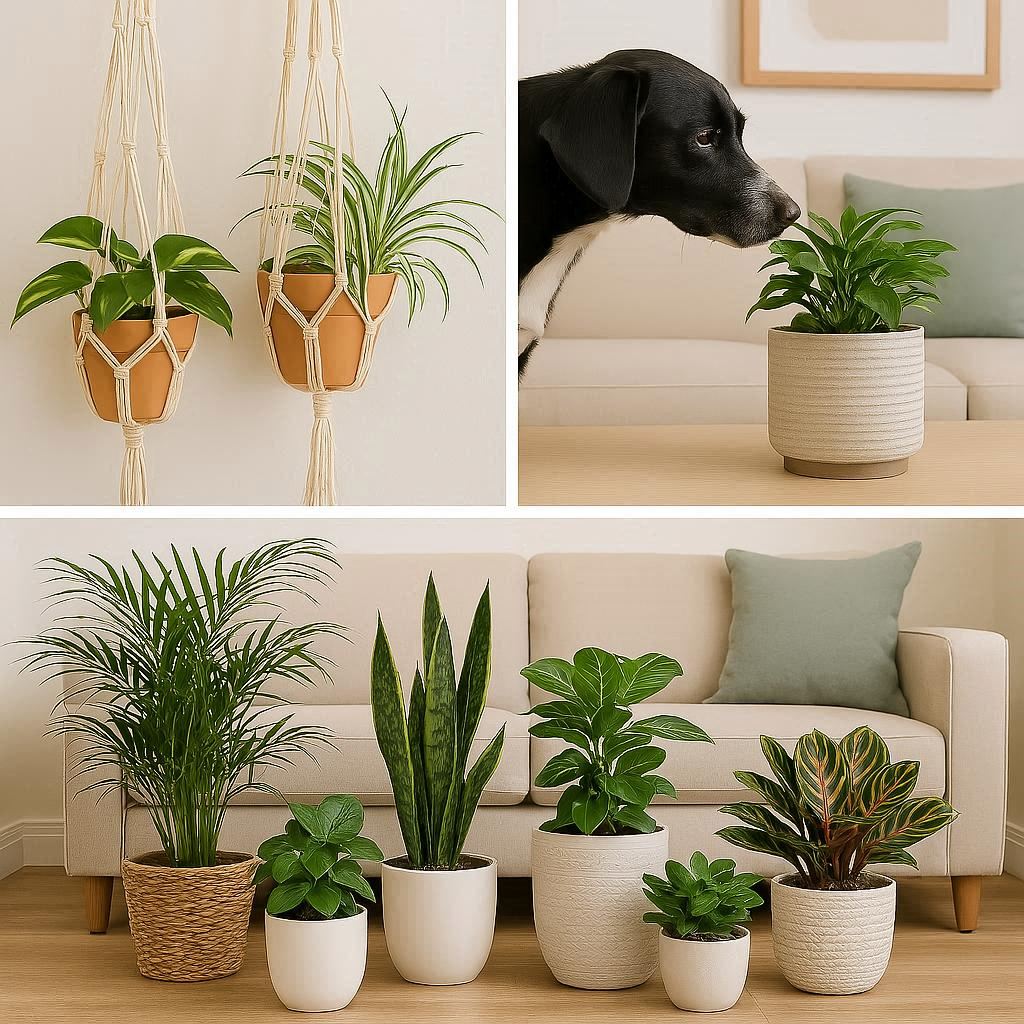
- Spider Plant (Chlorophytum comosum): Hardy, low-maintenance, and non-toxic to cats and dogs. Its arching leaves add a dramatic touch to any room.
- Boston Fern (Nephrolepis exaltata): Adds lush greenery and improves indoor air quality. Keep soil moist and indirect light.
- Areca Palm (Dypsis lutescens): A tropical favorite that brightens corners and is safe for pets.
- Calathea: Known for striking leaf patterns, low light tolerance, and pet-friendly nature.
- Bamboo Palm (Chamaedorea seifrizii): Elegant and safe, perfect for medium to large spaces.
- Parlor Palm (Chamaedorea elegans): Compact and low-maintenance, excellent for small apartments.
- Haworthia and Echeveria (Succulents): Low-water, decorative, and non-toxic, ideal for tabletops or shelves.
4. How to Arrange Pet-Safe Plants at Home
Strategic placement of plants ensures safety and aesthetic appeal:
- High Surfaces: Place hanging planters or shelves out of reach for curious pets.
- Corner Displays: Group plants in decorative pots to create green corners.
- Multi-Level Arrangements: Use stands or tiered shelves to combine various plant heights.
- Pet-Friendly Zones: Leave areas with pet-safe grass or herbs for your pets to nibble.
5. Tips for Caring for Pet-Safe Houseplants
Keeping plants healthy while living with pets requires attention:
- Watering Schedule: Consistent watering prevents drooping and yellow leaves.
- Indirect Light: Most pet-safe indoor plants thrive in indirect or filtered sunlight.
- Regular Cleaning: Dust leaves to ensure photosynthesis and keep pets from ingesting dust.
- Pruning: Remove dead or yellowing leaves to maintain appearance and safety.
6. Combining Pet-Safe Plants with Home Decor
Pet-safe plants can enhance your interior design:
- Modern Minimalism: Use sleek pots with low-maintenance plants like Parlor Palms or Haworthia.
- Boho Style: Layer hanging Spider Plants and Boston Ferns for a lush, relaxed vibe.
- Rustic Charm: Wooden planters with Bamboo Palms and succulents complement rustic interiors.
- Color Coordination: Match leaf colors with room textiles and furniture for visual harmony.
7. DIY Pet-Safe Plant Projects
Creative projects can integrate plants and pet safety:
- Herb Garden for Pets: Grow pet-safe herbs like catnip or parsley in small containers.
- Terrariums: Combine safe succulents or ferns in glass containers for decorative appeal.
- Hanging Planters: DIY macramé hangers keep plants out of reach but visually prominent.
- Pet-Friendly Windowsill Garden: Place small safe plants on windowsills for sunlight and curiosity.
8. Safety Tips and Common Mistakes
Even with safe plants, certain precautions help protect your pets:
- Avoid fertilizers or pesticides harmful to pets.
- Secure tall plants to prevent tipping.
- Monitor pets for unusual chewing or digging behavior.
- Introduce new plants gradually to observe your pet’s response.
9. Conclusion
Creating a pet-friendly indoor garden is both achievable and stylish. By selecting the right pet-safe houseplants and arranging them thoughtfully, you can enjoy a lush, vibrant home without risking your pets’ health. Incorporate plants that fit your decor, maintain them properly, and explore DIY projects to enhance your indoor environment. A safe and beautiful indoor garden is a win-win for both you and your furry companions.