
Table of Contents
- Introduction
- Common Types of Roses
- Identifying Roses by Flower Form
- Rose Foliage and Stem Characteristics
- Growing Conditions and Soil Preferences
- Watering and Fertilizing Roses
- Pruning and Maintenance Tips
- Pest and Disease Management
- Seasonal Care Guide
- Conclusion
1. Introduction
Roses are among the most popular and beloved flowering plants worldwide, admired for their beauty, fragrance, and diversity. From small garden beds to large landscapes, roses can enhance any outdoor space. Understanding the different types of roses and their specific care requirements is essential for both beginner and experienced gardeners. This guide covers the major rose types, how to identify them, and practical tips to keep them healthy and blooming year-round.
2. Common Types of Roses
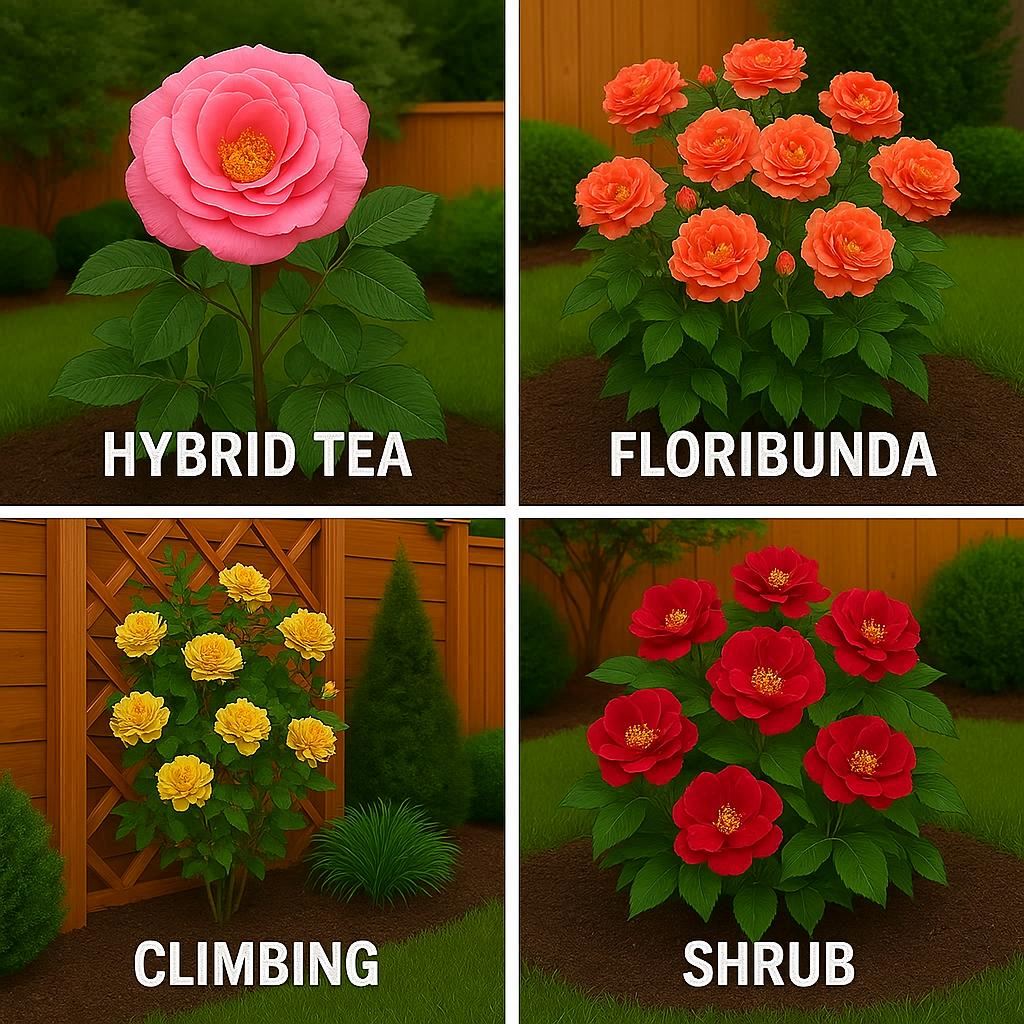
Roses can be broadly categorized into several main groups based on growth habit, flower form, and purpose:
- Hybrid Tea Roses: Known for their large, elegant blooms, often used in bouquets and formal gardens.
- Floribunda Roses: Produce clusters of flowers, offering continuous blooms and vibrant colors.
- Grandiflora Roses: Combine the characteristics of Hybrid Tea and Floribunda, with large blooms on bushy plants.
- Climbing Roses: Long canes that can be trained to grow on trellises, fences, or walls.
- Shrub Roses: Hardy and versatile, often used for hedges or naturalistic plantings.
- Miniature Roses: Compact and perfect for container gardening or small spaces.
3. Identifying Roses by Flower Form
Understanding flower form helps in rose identification and care:
- Single Flowers: Typically have 5–8 petals; often fragrant and attract pollinators.
- Semi-Double Flowers: 9–16 petals; bloom repeatedly and are easier to maintain.
- Double Flowers: 17–25 petals; highly ornamental but may require more care.
- Full or Very Full Flowers: More than 25 petals; dramatic in appearance but can be prone to fungal issues if not properly maintained.
Color variations, fragrance, and bloom timing also aid identification. Some roses are scented strongly, while others have little fragrance but produce abundant flowers.
4. Rose Foliage and Stem Characteristics
Leaf and stem characteristics provide additional identification clues:
- Leaf Shape and Size: Most roses have pinnate leaves with 3–9 leaflets; some species have glossy, dark green foliage.
- Stem Thorns: Hybrid Teas often have prominent thorns, while some modern shrubs are almost thornless.
- Growth Habit: Erect vs. sprawling growth can distinguish shrub roses from climbers.
Observing leaves’ color, texture, and arrangement helps identify disease-resistant varieties and informs care decisions.
5. Growing Conditions and Soil Preferences
Roses thrive in specific conditions that support strong growth and abundant blooms:
- Sunlight: Most roses need at least 6 hours of direct sunlight per day.
- Soil: Well-drained, loamy soil enriched with organic matter is ideal.
- pH: Slightly acidic soil (pH 6.0–6.5) enhances nutrient uptake.
- Spacing: Adequate spacing ensures airflow, reducing the risk of fungal diseases.
Selecting a location with good sunlight and air circulation is crucial for healthy roses.
6. Watering and Fertilizing Roses
Proper watering and feeding are essential for vibrant growth:
- Watering: Deep, infrequent watering encourages strong roots; avoid wetting foliage to prevent disease.
- Fertilizing: Use a balanced fertilizer formulated for roses; apply in early spring and repeat every 4–6 weeks during the growing season.
- Mulching: Retains soil moisture, regulates temperature, and suppresses weeds.
Consistency in watering and nutrition improves bloom quality and plant resilience.
7. Pruning and Maintenance Tips
Pruning shapes roses, encourages growth, and prolongs flowering:
- Timing: Late winter or early spring is ideal for most roses.
- Method: Remove dead, diseased, or crossing branches; cut back to outward-facing buds.
- Deadheading: Remove spent blooms regularly to promote further flowering.
Proper pruning balances plant health with aesthetic appeal.
8. Pest and Disease Management
Common rose pests and diseases require proactive management:
- Aphids: Small, sap-sucking insects; treat with insecticidal soap or neem oil.
- Black Spot and Powdery Mildew: Fungal infections; ensure good airflow and use fungicides if necessary.
- Japanese Beetles: Feed on foliage and flowers; handpick or use traps.
- Spider Mites: Thrive in hot, dry conditions; keep foliage hydrated and spray with water.
Regular inspection and early intervention minimize damage.
9. Seasonal Care Guide
Different seasons demand tailored care:
- Spring: Prune, fertilize, and plant new roses.
- Summer: Water deeply, mulch, and monitor for pests.
- Fall: Remove spent blooms, reduce fertilizer, prepare plants for dormancy.
- Winter: Protect roots with mulch or covers in cold climates.
Following seasonal care routines ensures roses remain healthy year after year.
10. Conclusion
Roses offer unmatched beauty and fragrance for any garden, but their care requires knowledge of types, growth habits, and maintenance needs. By understanding how to identify different rose types, observing foliage and blooms, and following proper watering, fertilizing, pruning, and pest management practices, gardeners can enjoy thriving roses for decades. Incorporating these practices makes rose gardening both rewarding and sustainable, whether in containers, beds, or sprawling landscapes.