An organized home does more than just look good—it reduces stress, saves time, and creates a foundation for efficient living. The constant battle against clutter can feel overwhelming, but with the right systems and strategies, you can transform chaotic spaces into calm, functional areas that serve your lifestyle. This comprehensive guide covers practical organization solutions for every area of your home, from strategic principles to room-specific implementations. Discover how to create sustainable systems that work with your habits rather than against them, turning organization from a constant chore into a maintainable lifestyle that enhances your daily experience.
Article Directory:
- The Foundation: Decluttering Before Organizing
- Organization Principles: Systems That Actually Work
- Zone-Based Organization Strategies
- Containerization and Labeling Systems
- Small Space Organization Solutions
- Digital Organization for Physical Space
- Maintenance: Keeping Your Systems Working
1. The Foundation: Decluttering Before Organizing
You cannot organize clutter. The essential first step to any organization project is to reduce the volume of items competing for space in your home.
- The Four-Box Method: When tackling any space, bring four boxes or bins labeled: Keep, Donate/Sell, Trash, and Relocate. This prevents the common mistake of simply rearranging clutter.
- The One-Year Rule: If you haven’t used an item in the past year (with exceptions for seasonal items and sentimental pieces), it’s likely safe to let it go.
- Category-by-Category Approach: Don’t organize by room; organize by category. Gather all items of one category (e.g., all books, all office supplies) from throughout the house before making decisions. This prevents scattered storage of similar items.
- Sentimental Items: Photograph items you’re emotionally attached to but don’t need to keep physically. Create a “memory box” with a finite size to contain your most precious mementos.
2. Organization Principles: Systems That Actually Work
Effective organization follows consistent principles that create intuitive, sustainable systems.
- The Golden Triangle: In kitchens and workspaces, position your most frequently used items within easy reach to create an efficient work triangle.
- Like with Like: Store similar items together. This seems obvious but is often overlooked when items get scattered across multiple locations.
- Accessibility Hierarchy: Place daily-use items at eye level and within easy reach. Seasonal or occasional items can go on higher shelves or harder-to-reach areas.
- Vertical Space Utilization: Walls and doors represent valuable real estate. Use shelves, hooks, and over-door organizers to maximize vertical storage.
- Visibility Matters: You can’t use what you can’t see. Use clear bins, open bins, or label everything clearly so items don’t get forgotten.
3. Zone-Based Organization Strategies
Create dedicated zones for specific activities to maintain order and functionality throughout your home.
- Entryway/Mudroom Zone: Create a “landing strip” with hooks for bags and coats, a tray for shoes, and a small bowl for keys. This prevents clutter from spreading into the home.
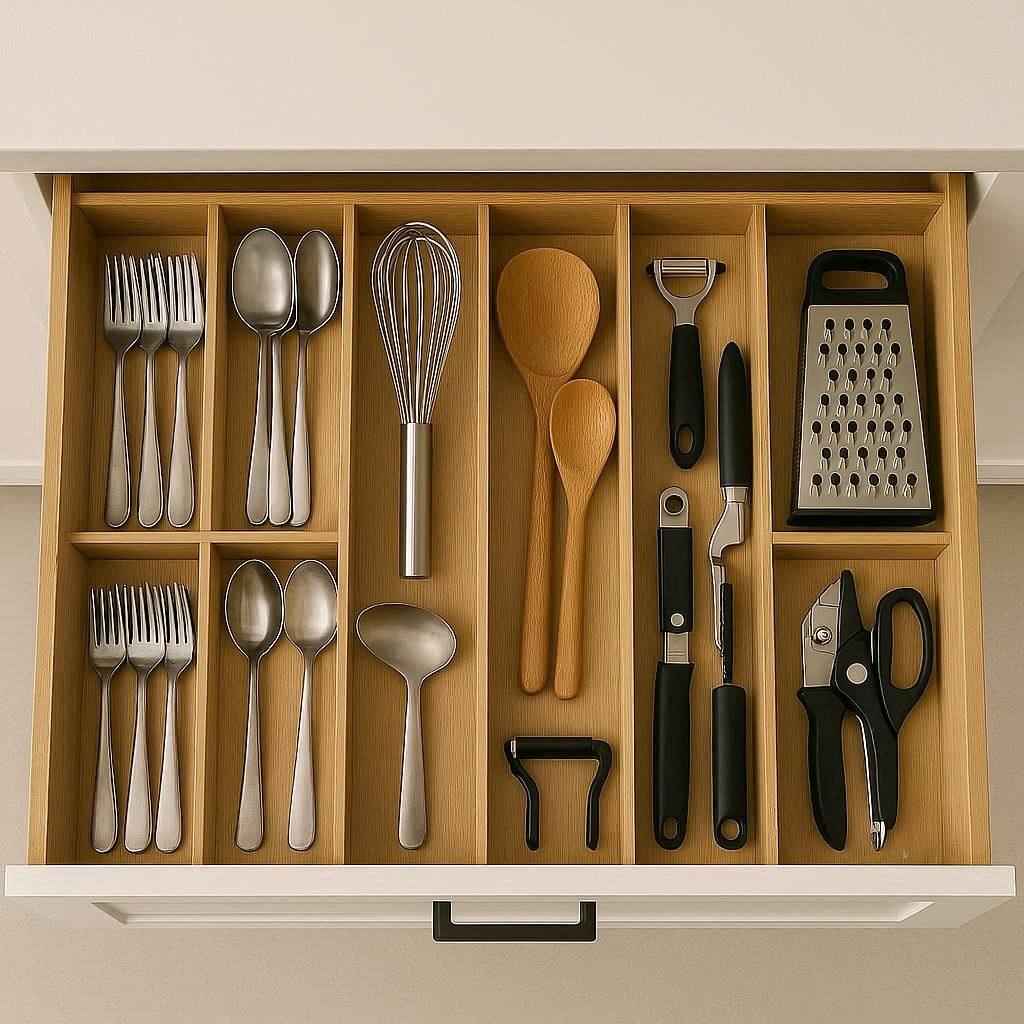
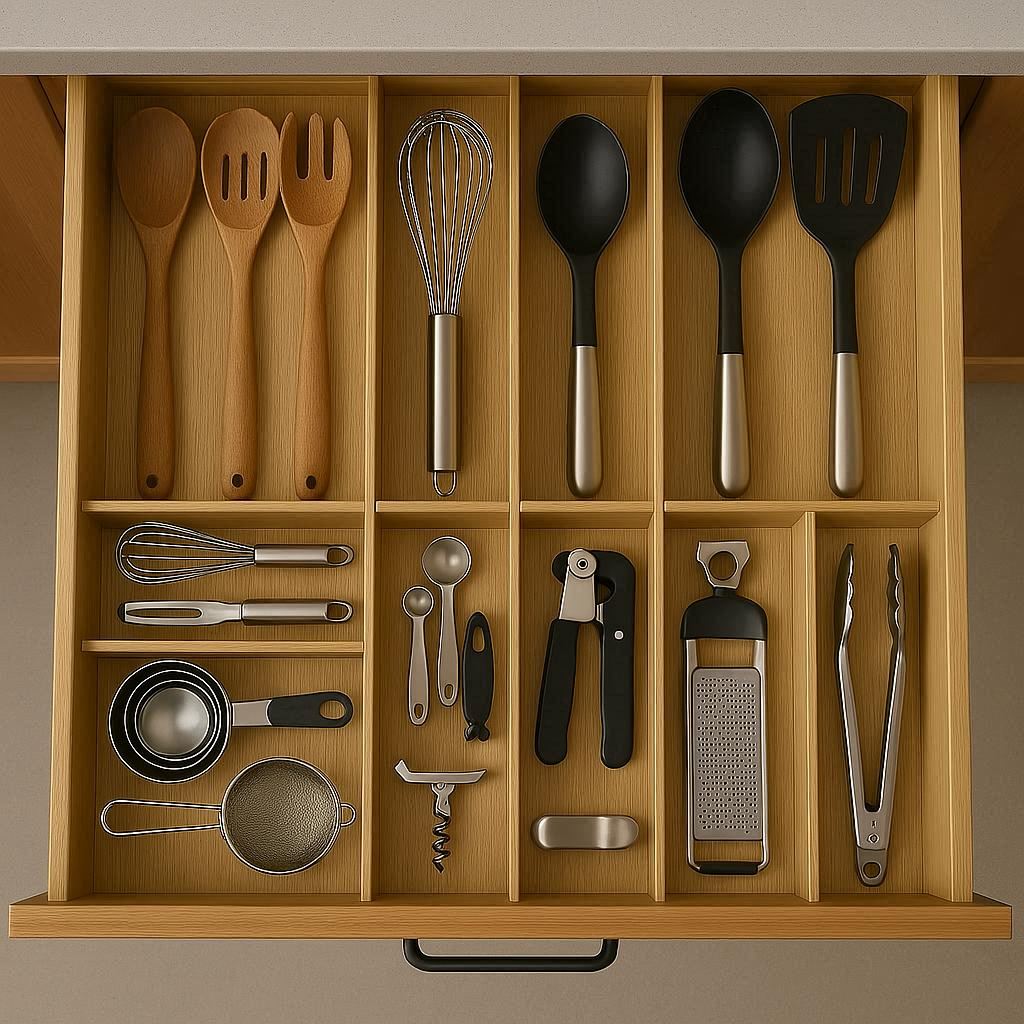
- Kitchen Zones: Establish dedicated zones for food preparation (knives, cutting boards), cooking (pots, spices), baking (supplies, measuring tools), and coffee/tea stations.
- Home Office Zone: Even in multipurpose rooms, create a defined workspace with all necessary supplies contained within that area to maintain mental separation.
- Laundry Zone: Keep detergent, stain treatments, and drying racks in one dedicated area to streamline the laundry process.
4. Containerization and Labeling Systems
Containers create boundaries and limits, while labeling provides clarity and ensures maintenance.
- The Container Rule: The container (whether a drawer, bin, or shelf) determines how much you can keep. You cannot keep more than fits comfortably in the designated container.
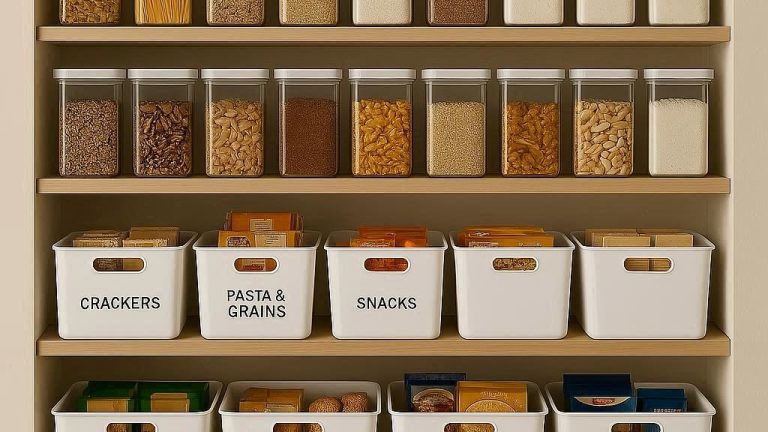
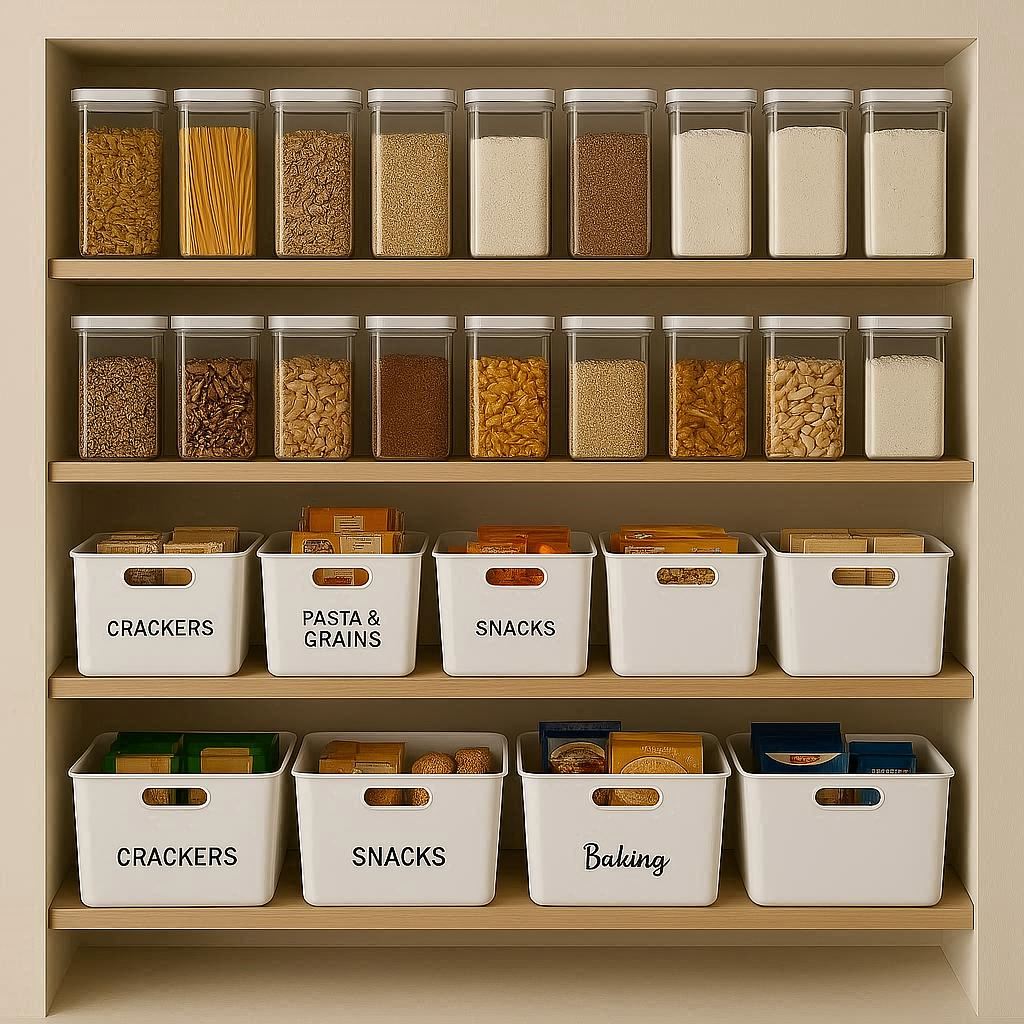
- Clear Containers: Ideal for food pantries and spaces where visibility helps with inventory management and usage.
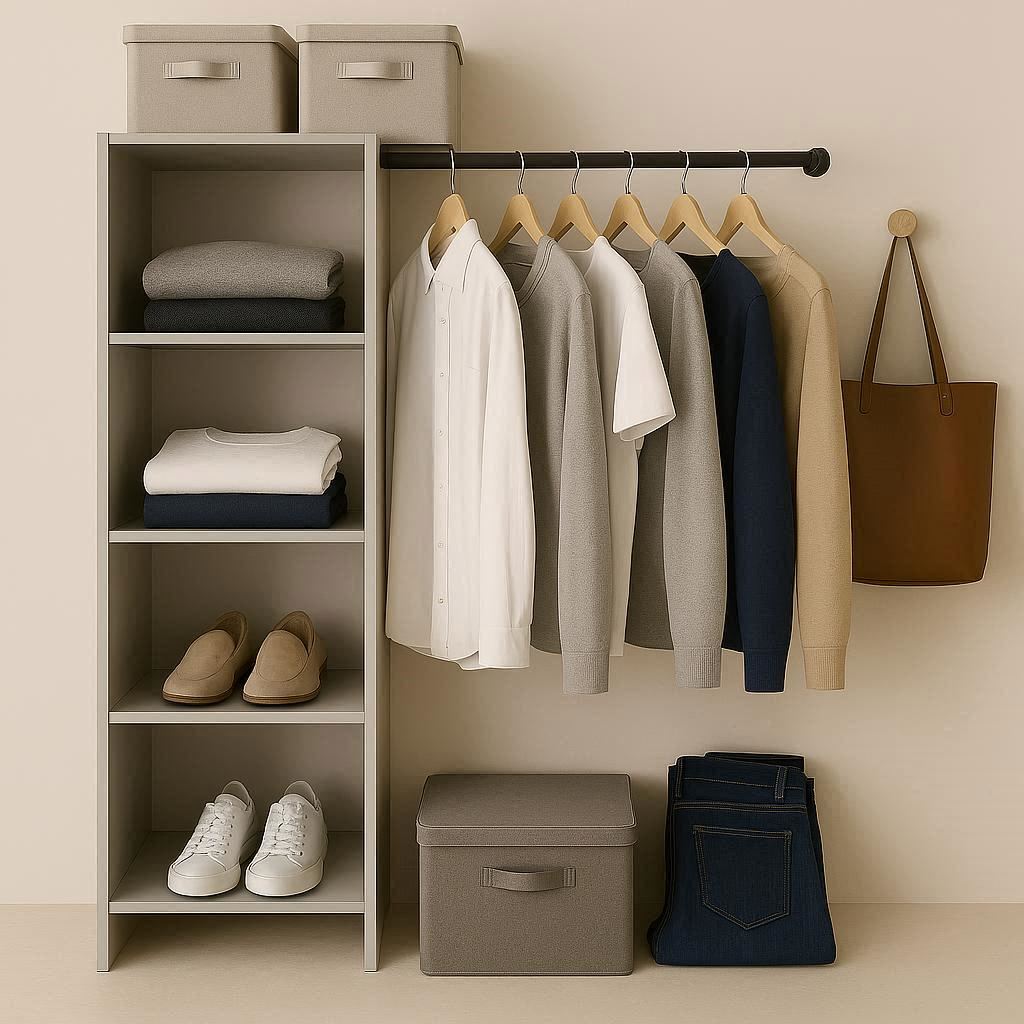
- Opaque Bins: Better for closets, under-bed storage, and areas where visual clutter causes stress.
- Consistent Labeling: Use a consistent labeling system (printed labels work best for readability). Include contents and expiration dates when applicable.
- Modular Systems: Use modular bin systems that work together (like IKEA’s VARIERA or SKUBB series) for a cohesive look and flexible configurations.
5. Small Space Organization Solutions
Limited square footage requires creative thinking and multifunctional solutions.
- Furniture with Storage: Choose ottomans, beds, and coffee tables with built-in storage to hide items while maintaining aesthetic appeal.
- Door and Wall Storage: Use over-door organizers, wall-mounted racks, and pegboards to utilize often-wasted vertical space.
- Double-Duty Solutions: A rolling cart can serve as a bar cart, kitchen island, or bathroom storage. Stackable bins make use of vertical space in closets.
- Foldable and Nesting Items: Choose folding chairs, nesting tables, and collapsible storage that can be minimized when not in use.
6. Digital Organization for Physical Space
Technology can significantly enhance and maintain your physical organization systems.
- Digital Inventories: Use apps like Google Keep, Evernote, or dedicated home inventory apps to track what you own, especially for insurance purposes and to prevent duplicate purchases.
- Digital Manuals: Scan instruction manuals and save them to cloud storage to reduce paper clutter.
- Photo Inventories: Take photos of organized spaces as reference points for quick resets after cleaning or when family members help with tidying.
- Digital Scheduling: Set recurring calendar reminders for seasonal organization tasks like rotating clothing storage or checking emergency supplies.
7. Maintenance: Keeping Your Systems Working
Organization is not a one-time project but an ongoing practice. Simple maintenance habits prevent backsliding into clutter.
- The One-Minute Rule: If a task takes less than one minute, do it immediately (hanging up a coat, putting a dish in the dishwasher, filing a paper).
- Daily Reset: Spend 10-15 minutes each evening returning items to their designated homes. This prevents small messes from accumulating into overwhelming clutter.
- The In/Out Rule: For every new item that enters your home, consider removing one similar item to maintain equilibrium.
- Regular Reviews: Schedule quarterly “organization check-ups” to reassess systems that aren’t working and adjust as your needs change.
- Family Involvement: Ensure everyone in the household understands the systems. Use pictures for young children and clear labels so everyone can participate in maintenance.
Conclusion: Organization as an Ongoing Practice
True organization is not about achieving perfection but about creating systems that make your life easier and your space more functional. Start small with one drawer, one shelf, or one category of items. Celebrate your progress and understand that developing organized habits takes time. The goal is not a magazine-ready home but a space that works efficiently for you and your family, reducing daily stress and creating more time for what truly matters. By implementing these principles and strategies, you’ll develop sustainable systems that transform organization from a daunting task into an effortless part of your lifestyle.


