Table of Contents
- Introduction
- The Power of Light Colors
- Using Mirrors Strategically
- Furniture Choices for Small Spaces
- Maximizing Vertical Space
- Decluttering and Smart Storage
- Accent Lighting and Visual Tricks
- Creating Illusions with Flooring and Rugs
- Conclusion
1. Introduction
Living in a small room doesn’t mean sacrificing style or comfort. With the right design strategies, even the tiniest spaces can feel open, airy, and inviting. Using clever color schemes, mirror placement, and smart furniture choices, you can visually expand your small room while maintaining a cozy and functional environment. This guide explores practical tips and creative tricks to make your small room look bigger without expensive renovations.
2. The Power of Light Colors
Color plays a key role in making a room feel spacious:
- Soft Neutrals: Shades like ivory, soft gray, and beige reflect light and create a sense of openness.
- Pastel Tones: Soft blues, greens, and pinks give a fresh and airy feel without overwhelming the space.
- Monochromatic Schemes: Using different shades of a single color can make walls, furniture, and floors appear continuous, reducing visual clutter.
- Light Ceilings: Painting the ceiling a lighter shade than the walls can give the illusion of height.
Tip: Avoid dark, heavy colors on all walls as they tend to shrink the perception of space.
3. Using Mirrors Strategically
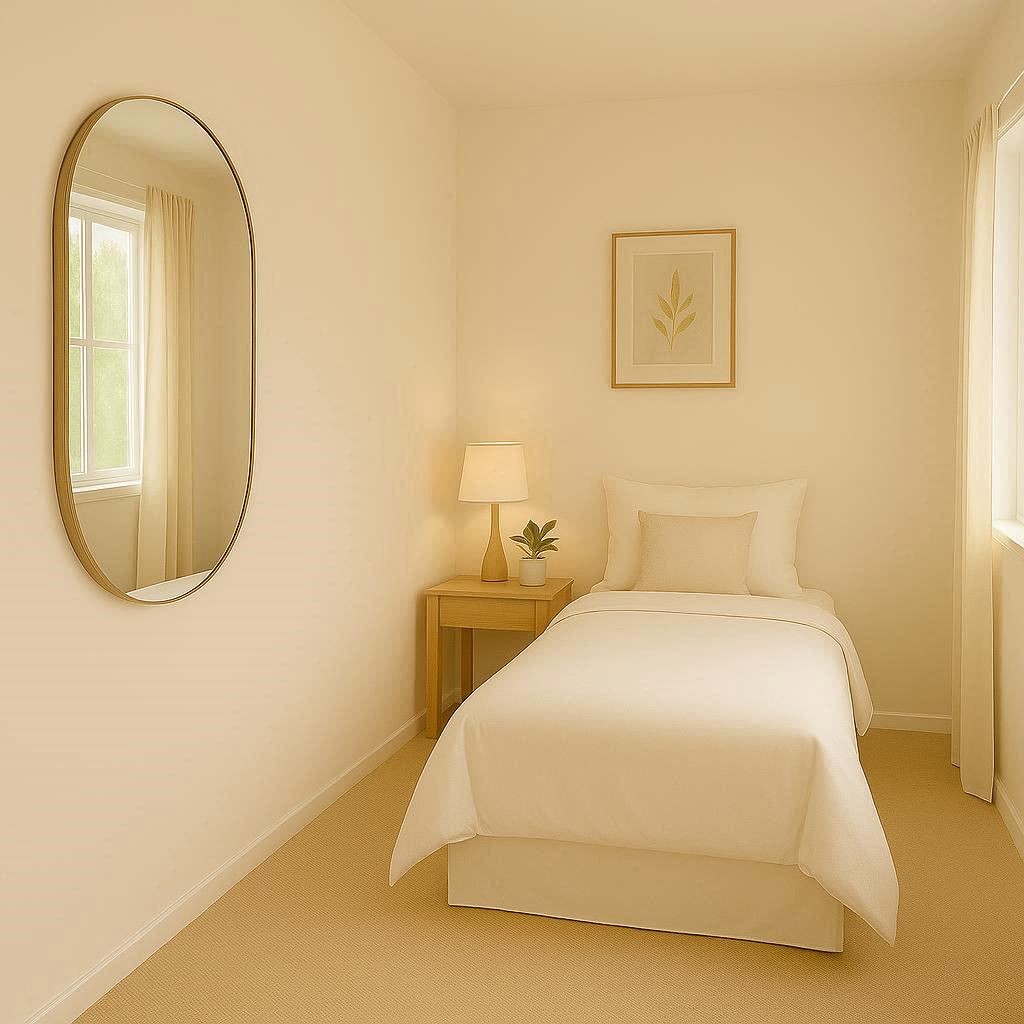
Mirrors are one of the most effective tools for visually enlarging a room:
- Large Wall Mirrors: Place a full-length mirror on a wall to reflect light and expand depth.
- Mirrored Furniture: Cabinets or console tables with mirrored surfaces double the reflective effect.
- Opposite Windows: Position mirrors across from windows to bounce natural light and create an open feeling.
- Grouped Small Mirrors: A collection of smaller mirrors arranged creatively can add both depth and decoration.
4. Furniture Choices for Small Spaces
Selecting the right furniture can make a huge difference:
- Multi-Functional Pieces: Storage ottomans, foldable tables, and sofa beds save space and add utility.
- Transparent Materials: Acrylic or glass tables maintain a sense of openness.
- Slim Profiles: Opt for chairs and sofas with narrow arms and legs to reduce visual bulk.
- Floating Furniture: Wall-mounted desks, shelves, and nightstands free up floor space.
5. Maximizing Vertical Space
When floor space is limited, think upward:
- Tall Shelving Units: Use vertical bookcases or wall-mounted shelves to store items without cluttering the floor.
- Lofted Beds: Elevate the bed to create a functional area underneath for work or storage.
- Hanging Storage: Hooks, pegboards, and wall-mounted baskets keep items accessible yet off the floor.
- Vertical Patterns: Striped wallpaper or vertically oriented art draws the eye upward, adding perceived height.
6. Decluttering and Smart Storage
A tidy room always feels bigger:
- Concealed Storage: Use under-bed drawers, furniture with hidden compartments, or built-in cabinets.
- Open Storage Wisely: Keep frequently used items within reach but avoid overcrowding shelves.
- Minimalist Approach: Limit decorative objects and furniture to essential pieces.
- Seasonal Rotation: Store off-season items elsewhere to maintain an airy environment.
7. Accent Lighting and Visual Tricks
Lighting affects perception of space:
- Layered Lighting: Combine ambient, task, and accent lighting for depth and warmth.
- Wall Sconces: Free up floor space compared to table lamps.
- Reflective Fixtures: Shiny surfaces on lamps and chandeliers enhance the reflective effect of light.
- Directional Lighting: Spotlights or track lights aimed at walls or ceilings can create dimension.
8. Creating Illusions with Flooring and Rugs
Floor design can make rooms feel longer or wider:
- Continuous Flooring: Using the same flooring throughout prevents visual breaks and opens the room.
- Light-Colored Floors: Pale wood, laminate, or tiles expand the sense of space.
- Area Rugs: Strategically placed rugs can define zones without chopping up the room.
- Diagonal Patterns: Flooring or rugs laid diagonally draw the eye across the room, creating dynamic perception.
9. Conclusion
Making a small room look bigger is about combining practical design with visual tricks. Light colors, mirrors, vertical storage, and carefully chosen furniture all contribute to an open and airy feel. Layered lighting, decluttering, and thoughtful flooring choices further enhance the perception of space. By applying these color and mirror tricks, any small room can feel comfortable, stylish, and surprisingly spacious.