Table of Contents
- Introduction
- Understanding Your Home Plumbing System
- Common Tools Every Homeowner Needs
- Fixing Leaky Faucets
- Unclogging Drains
- Toilet Maintenance and Repairs
- Replacing Showerheads and Fixtures
- Preventing Pipe Freezing and Damage
- Safety Tips and Best Practices
- Conclusion
1. Introduction
Plumbing problems are among the most common household issues, and knowing basic plumbing skills can save homeowners both time and money. Understanding how your home’s plumbing system works allows you to handle small repairs confidently and prevent costly damage. From leaky faucets to clogged drains, mastering essential plumbing tasks empowers you to keep your home running smoothly and efficiently.
2. Understanding Your Home Plumbing System
Before tackling repairs, it’s important to understand the components of your plumbing system:
- Water Supply Lines: Pipes that bring fresh water into your home.
- Drain-Waste-Vent (DWV) System: Pipes that remove wastewater and prevent sewer gases from entering the home.
- Fixtures: Sinks, faucets, toilets, and showers.
- Shut-Off Valves: Essential for stopping water flow during repairs.
Knowing where these components are located and how they work together is critical for effective repairs.
3. Common Tools Every Homeowner Needs
A basic plumbing toolkit allows you to handle most minor repairs:
- Adjustable Wrenches: For tightening and loosening nuts and fittings.
- Pipe Wrenches: Useful for working with larger pipes.
- Plunger: Essential for clearing minor clogs in sinks and toilets.
- Drain Snake or Auger: For removing stubborn clogs in drains.
- Teflon Tape: Ensures a watertight seal on threaded pipe connections.
- Bucket and Towels: Useful for catching water during repairs.
With these tools on hand, you can tackle most basic plumbing tasks without needing a professional.
4. Fixing Leaky Faucets
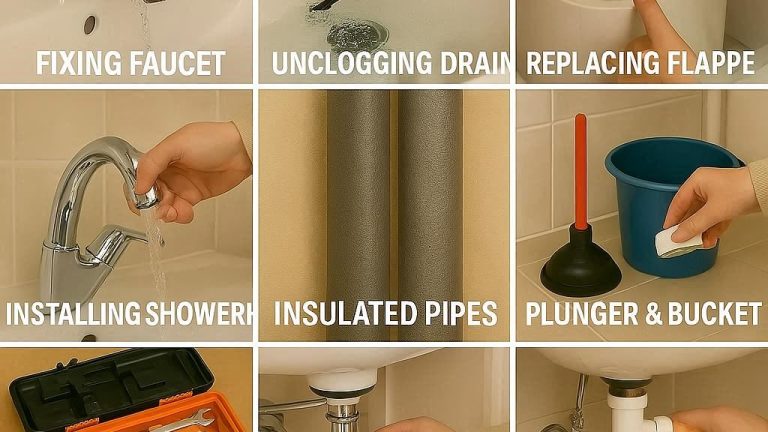
Leaky faucets are not only annoying but can also waste a significant amount of water. Steps to fix a basic faucet leak:
- Turn Off the Water Supply: Locate and close the valve beneath the sink.
- Disassemble the Faucet: Remove handles and other components carefully.
- Inspect and Replace Seals or Washers: Worn-out washers or O-rings are common causes of leaks.
- Reassemble the Faucet: Ensure all parts are tightened properly.
- Test for Leaks: Turn the water back on and check for drips.
Regular maintenance and timely repairs can extend the life of your faucets.
5. Unclogging Drains
Clogged drains are another frequent household issue. Here are some effective techniques:
- Plunger Method: Suitable for sinks and toilets with minor clogs.
- Drain Snake: Effective for clearing deeper blockages in pipes.
- Natural Cleaning Solutions: A mix of baking soda and vinegar can help break down buildup.
- Preventive Tips: Avoid pouring grease or large food particles down the sink.
Regularly cleaning drains prevents major blockages and keeps water flowing smoothly.
6. Toilet Maintenance and Repairs
Toilets can develop issues such as running water or blockages. Basic maintenance skills include:
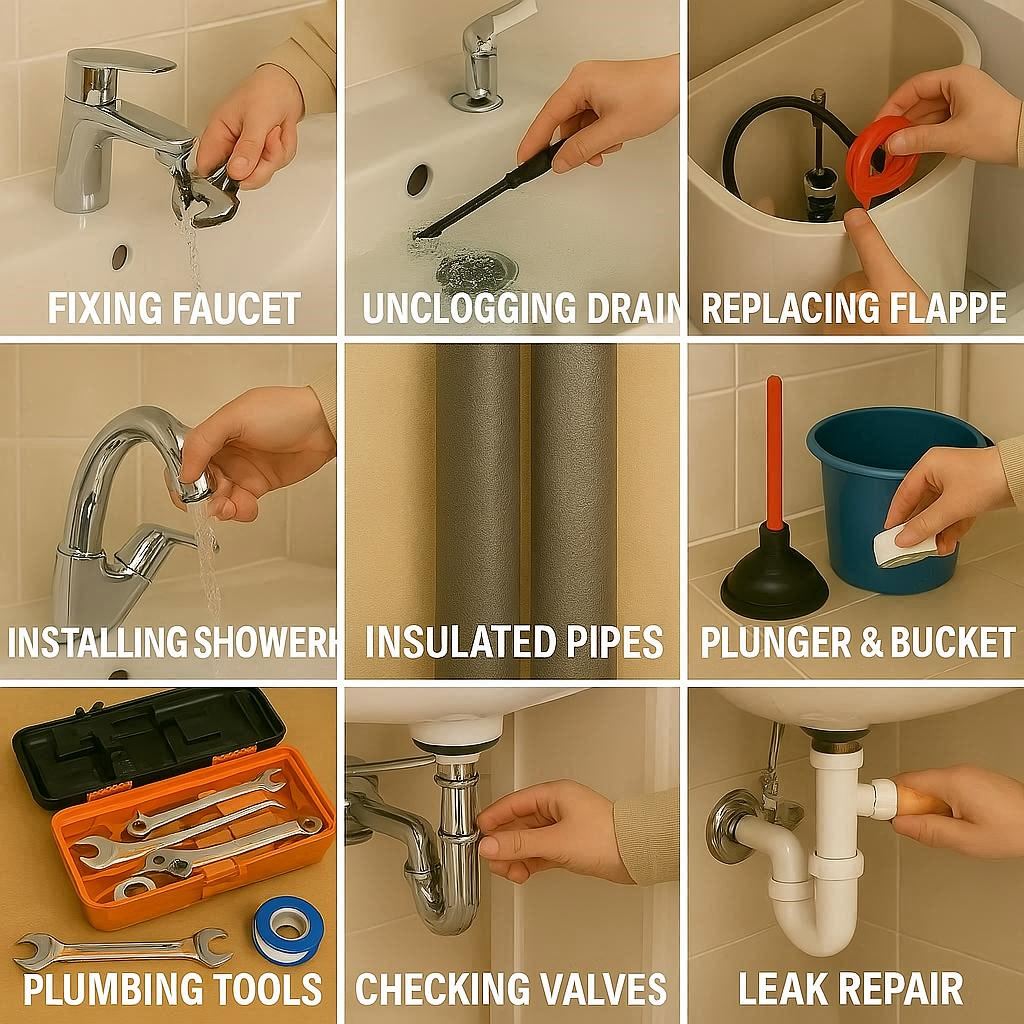
- Flapper Replacement: Fixes a running toilet by ensuring a proper seal in the tank.
- Adjusting the Fill Valve: Controls the water level and prevents overflow.
- Clearing Minor Clogs: Use a plunger or auger to remove blockages.
- Preventive Cleaning: Regularly clean the toilet bowl and tank to avoid buildup.
Understanding toilet mechanics helps prevent costly water bills and emergency plumbing calls.
7. Replacing Showerheads and Fixtures
Upgrading or replacing showerheads and fixtures is a simple DIY task:
- Turn Off the Water Supply: Prevents leaks during installation.
- Remove Old Fixture: Use an adjustable wrench if necessary.
- Apply Teflon Tape: Wrap threads to create a watertight seal.
- Install New Fixture: Tighten and test for leaks.
- Check Water Flow and Pressure: Ensure proper installation and functionality.
Simple upgrades can improve water efficiency and enhance your bathroom experience.
8. Preventing Pipe Freezing and Damage
In colder climates, frozen pipes can cause serious damage. Preventive steps include:
- Insulate Exposed Pipes: Use foam or heat tape to protect vulnerable areas.
- Let Faucets Drip During Freezing Temperatures: Keeps water moving and reduces the risk of freezing.
- Seal Cracks and Openings: Prevent cold air from reaching pipes.
- Know Your Main Shut-Off Valve: In emergencies, quickly shutting off water limits damage.
Being proactive minimizes the risk of costly plumbing emergencies.
9. Safety Tips and Best Practices
Basic safety practices ensure you handle plumbing tasks without risk:
- Always turn off the water supply before repairs.
- Use gloves and protective eyewear when working with chemicals or sharp tools.
- Avoid excessive force on pipes or fixtures to prevent damage.
- Keep a basic plumbing guide handy for reference.
Following these practices allows you to confidently perform home plumbing tasks safely.
10. Conclusion
Mastering basic plumbing skills empowers homeowners to handle everyday repairs, prevent emergencies, and save money. By understanding your home plumbing system, having the right tools, and practicing preventive maintenance, you can confidently tackle leaks, clogs, and minor fixture upgrades. These essential skills not only increase your home’s efficiency but also give you peace of mind knowing you can address common plumbing problems quickly.