Table of Contents
- Introduction
- Common Tomato Plant Diseases
- 2.1 Early Blight
- 2.2 Late Blight
- 2.3 Fusarium Wilt
- 2.4 Septoria Leaf Spot
- Common Tomato Pests
- 3.1 Aphids
- 3.2 Tomato Hornworms
- 3.3 Whiteflies
- 3.4 Spider Mites
- Identification Techniques
- Organic and Chemical Treatment Methods
- Preventive Measures for Healthy Tomato Plants
- Cultural Practices to Reduce Disease and Pest Incidence
- Maintaining Long-Term Plant Health
- Conclusion
1. Introduction
Tomato plants are among the most popular and widely cultivated garden vegetables. However, they are highly susceptible to a variety of diseases and pests, which can severely reduce yield and fruit quality. Identifying problems early and applying the correct treatment is crucial to maintaining healthy tomato plants. This article covers the most common tomato plant diseases and pests, practical identification tips, and effective treatment strategies to keep your plants thriving.
2. Common Tomato Plant Diseases
2.1 Early Blight
Early blight is caused by the fungus Alternaria solani. It usually appears on older leaves first, creating concentric rings that form a “target-like” pattern. The infection can spread to stems and fruits if left untreated.
Symptoms:
- Dark brown or black leaf spots with concentric rings
- Yellowing leaves surrounding the spots
- Premature leaf drop
Treatment:
- Remove and destroy infected leaves
- Apply fungicides containing chlorothalonil or copper-based compounds
- Rotate crops annually to prevent soil buildup of the fungus
2.2 Late Blight
Late blight, caused by Phytophthora infestans, is infamous for causing the Irish potato famine and can devastate tomato crops.
Symptoms:
- Water-soaked lesions on leaves
- Brown, leathery spots on fruits
- White fungal growth on the underside of leaves under humid conditions
Treatment:
- Remove and destroy infected plant material immediately
- Use resistant tomato varieties
- Apply fungicides such as mancozeb or copper-based sprays regularly in wet conditions
2.3 Fusarium Wilt
Fusarium wilt is a soil-borne fungal disease caused by Fusarium oxysporum f. sp. lycopersici. It blocks water transport in the plant, causing wilting and eventual death.
Symptoms:
- Yellowing of older leaves
- Brown streaks in the vascular tissue of stems
- Stunted plant growth
Treatment:
- Plant resistant tomato varieties (F1 hybrids with Fusarium resistance)
- Solarize soil before planting to reduce fungal spores
- Avoid planting tomatoes in the same soil for consecutive years
2.4 Septoria Leaf Spot
Septoria leaf spot is caused by the fungus Septoria lycopersici and is one of the most common leaf diseases in humid climates.
Symptoms:
- Small, circular spots with gray centers and dark margins
- Leaves yellow and drop prematurely
- Infection spreads rapidly in dense foliage
Treatment:
- Prune lower leaves to improve air circulation
- Apply copper-based fungicides or neem oil sprays
- Water plants at the base to prevent leaf wetting

3. Common Tomato Pests
3.1 Aphids
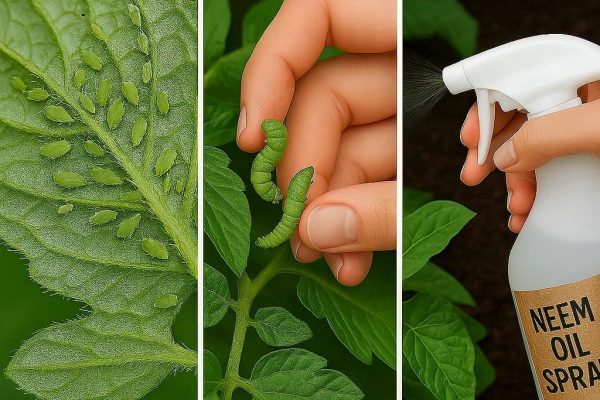
Aphids are small, soft-bodied insects that feed on plant sap, weakening plants and transmitting viruses.
Symptoms:
- Sticky honeydew on leaves
- Curling or yellowing leaves
- Presence of tiny insects clustered on stems or leaf undersides
Treatment:
- Spray with insecticidal soap or neem oil
- Encourage natural predators like ladybugs
- Wash off with a strong water spray
3.2 Tomato Hornworms
Tomato hornworms are large green caterpillars that can defoliate plants rapidly.
Symptoms:
- Large chewed leaves
- Frass (caterpillar droppings) on leaves
- Horn-like projection on the rear of the caterpillar
Treatment:
- Handpick caterpillars off plants
- Use Bacillus thuringiensis (Bt) for biological control
- Encourage birds and predatory insects
3.3 Whiteflies
Whiteflies are small, white, winged insects that feed on plant sap and transmit viral diseases.
Symptoms:
- Yellowing leaves
- Sticky honeydew on leaves and fruit
- Tiny white insects flying off leaves when disturbed
Treatment:
- Use yellow sticky traps
- Spray with neem oil or insecticidal soap
- Introduce natural predators like Encarsia formosa
3.4 Spider Mites
Spider mites are tiny arachnids that thrive in hot, dry conditions and suck plant juices.
Symptoms:
- Fine webbing on leaf undersides
- Tiny yellow or bronze spots on leaves
- Leaf drop in severe infestations
Treatment:
- Spray with water to dislodge mites
- Use miticides or insecticidal soap
- Maintain humidity around plants
4. Identification Techniques
- Regularly inspect leaves, stems, and fruits for signs of disease or pest activity
- Compare symptoms with trusted plant pathology guides
- Use magnification for small pests like aphids or spider mites
- Note environmental conditions—high humidity often favors fungal diseases
5. Organic and Chemical Treatment Methods
- Organic sprays: neem oil, insecticidal soap, copper-based fungicides
- Chemical fungicides: mancozeb, chlorothalonil for fungal diseases
- Biological controls: beneficial insects, Bacillus thuringiensis
- Integrated Pest Management: combine cultural, biological, and chemical strategies for effective control
6. Preventive Measures for Healthy Tomato Plants
- Start with disease-resistant varieties
- Ensure proper spacing to improve airflow
- Rotate crops annually
- Avoid overhead watering to minimize leaf wetness
- Mulch around plants to reduce soil splash and weed competition
7. Cultural Practices to Reduce Disease and Pest Incidence
- Prune lower leaves to reduce fungal contact
- Maintain healthy soil with compost and balanced fertilizers
- Remove weeds that may harbor pests
- Monitor regularly for early signs of stress, disease, or insects
8. Maintaining Long-Term Plant Health
- Keep records of disease and pest occurrences for future seasons
- Practice crop rotation to reduce soil-borne pathogens
- Fertilize appropriately to avoid nutrient deficiencies
- Remove and destroy infected plants promptly to prevent spread
9. Conclusion
Tomato plants are vulnerable to a variety of diseases and pests, but with careful monitoring, early identification, and the right treatment, gardeners can maintain healthy and productive plants. Combining preventive measures, cultural practices, and both organic and chemical controls ensures a bountiful tomato harvest season after season. Proper plant care not only increases yield but also reduces stress on the garden ecosystem.