
Table of Contents
- Introduction
- Planning Your Exterior Painting Project
- Choosing the Right Paint and Materials
- Surface Preparation
- Priming the Exterior
- Painting Techniques and Tips
- Safety Considerations
- Maintenance and Longevity
- Conclusion
1. Introduction
Exterior house painting is one of the most impactful DIY home improvement projects you can undertake. A fresh coat of paint not only enhances curb appeal but also protects your home from weather damage, decay, and pests. While painting may seem straightforward, achieving a professional-looking finish requires careful preparation, proper materials, and effective techniques. This guide will walk you through every step to ensure your exterior painting project is both beautiful and long-lasting.
2. Planning Your Exterior Painting Project
Proper planning is key to a successful paint job:
- Assess the Scope: Walk around your home and note areas that need repair, sanding, or priming.
- Set a Budget: Factor in paint, primers, brushes, rollers, ladders, drop cloths, and any scaffolding rental.
- Check the Weather: Exterior painting is best done in mild, dry conditions to ensure proper adhesion. Avoid painting in direct sun, rain, or high humidity.
- Create a Timeline: Break the project into preparation, priming, painting, and finishing stages.
3. Choosing the Right Paint and Materials
Selecting the correct paint is critical for durability and aesthetics:
- Paint Type: Use high-quality exterior acrylic latex paint for most siding types. Oil-based paints are durable but harder to clean and slower to dry.
- Finish: Satin or semi-gloss finishes are ideal for trim and doors, while matte finishes work well for walls.
- Color Selection: Consider your home’s style, neighborhood trends, and climate. Light colors reflect heat, while dark colors hide imperfections.
- Essential Tools: Brushes, rollers, paint sprayer (optional), painter’s tape, drop cloths, ladders, caulk, scrapers, and sandpaper.
4. Surface Preparation
Preparation is the most critical step for a lasting paint job:
- Cleaning the Surface: Use a pressure washer or hose with a scrub brush to remove dirt, mildew, and loose paint.
- Repairing Damages: Fill cracks, holes, and gaps with exterior-grade caulk or filler. Replace rotted wood or damaged siding.
- Sanding: Smooth rough areas to ensure paint adheres properly.
- Removing Loose Paint: Scrape off peeling or flaking paint to prevent future chipping.
- Protecting Surroundings: Cover plants, walkways, and outdoor furniture with drop cloths.
5. Priming the Exterior
Priming is essential for a smooth, uniform finish:
- When to Prime: Always prime bare wood, patched areas, or surfaces with stains.
- Type of Primer: Use an exterior-grade primer compatible with your chosen paint.
- Application Tips: Apply primer evenly using a brush, roller, or sprayer. Allow adequate drying time according to manufacturer instructions.
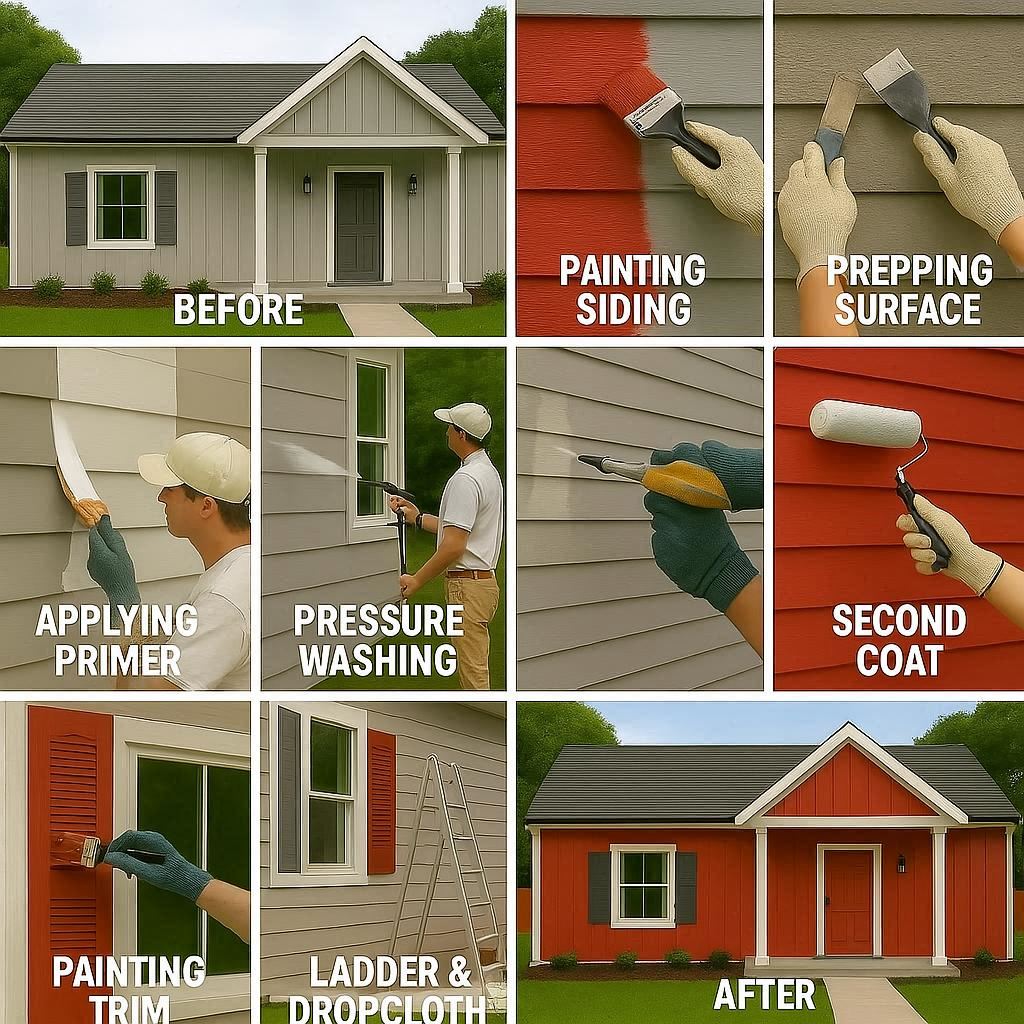
6. Painting Techniques and Tips
Achieve a professional finish with the right techniques:
- Start from the Top: Begin painting at the highest points and work your way down to prevent drips and streaks.
- Use Proper Brush and Roller Techniques: For brushes, use long, smooth strokes. For rollers, apply paint in a W-pattern for even coverage.
- Multiple Coats: Apply at least two coats for uniform color and durability. Allow sufficient drying time between coats.
- Paint Sprayer Use: If using a sprayer, mask windows and trim, and maintain consistent distance to avoid drips.
- Trim and Detail Work: Paint trim, doors, and shutters last to ensure clean edges.
7. Safety Considerations
Safety should never be overlooked during exterior painting:
- Ladders and Scaffolding: Always ensure stability, and never overreach.
- Protective Gear: Wear gloves, safety glasses, and a mask to avoid inhaling paint fumes or dust.
- Weather Precautions: Avoid painting on windy or extremely hot days.
- Chemical Safety: Store paints, solvents, and cleaners away from children and pets.
8. Maintenance and Longevity
Proper maintenance extends the life of your exterior paint:
- Regular Inspection: Check annually for cracks, peeling, or fading.
- Touch-Ups: Address small areas of damage immediately to prevent larger repairs.
- Cleaning: Wash exterior surfaces gently to remove dirt, mildew, and algae.
- Repainting Cycle: Most exterior paints last 5-10 years, depending on climate and paint quality.
9. Conclusion
Exterior house painting is a transformative DIY project that enhances your home’s appearance and protects its structure. By planning carefully, selecting the right materials, preparing surfaces thoroughly, and using effective painting techniques, you can achieve professional-quality results. With proper safety precautions and maintenance, your home’s exterior will remain vibrant and durable for years to come.
