Table of Contents
- Introduction
- Understanding Shade Conditions
- Choosing the Right Containers
- Top Plants for Shady Container Gardens
- Combining Plants for Visual Interest
- Seasonal Color and Texture
- Maintenance Tips for Shady Containers
- Creative Design Ideas and Arrangements
- Conclusion
1. Introduction
Container gardening is an excellent way to bring life and greenery into spaces where traditional garden beds are not possible. However, shady areas often pose a challenge for gardeners who want vibrant and thriving container gardens. By selecting plants that thrive in low-light conditions and using creative design strategies, you can transform shaded patios, balconies, and corners into lush, colorful oases. This guide explores the best plants for shady container gardens and offers practical tips for designing beautiful shade-friendly arrangements.
2. Understanding Shade Conditions
Before choosing plants, it’s essential to understand the type of shade you have:
- Full Shade: Less than two hours of direct sunlight per day. Suitable for plants that tolerate very low light.
- Partial Shade: Receives two to four hours of direct sunlight or dappled light throughout the day. Many shade-loving plants thrive in this environment.
- Filtered Shade: Sunlight filtered through trees or structures, creating gentle, indirect light.
Knowing the level of shade helps you choose plants that will flourish and maintain healthy growth in containers.
3. Choosing the Right Containers
Selecting the appropriate container is crucial for shade gardening success:
- Size: Larger containers provide more space for roots and retain moisture longer, which is helpful in shaded areas where soil dries slowly.
- Material: Terracotta, ceramic, and resin pots offer good durability, while lighter plastic pots are easier to move.
- Drainage: Ensure all containers have adequate drainage holes to prevent waterlogging, which can be a risk in shaded environments.
- Design: Choose colors and shapes that complement your plants and patio or balcony décor.
4. Top Plants for Shady Container Gardens
Shade-tolerant plants come in various textures, heights, and colors, allowing for diverse designs. Here are some excellent options:
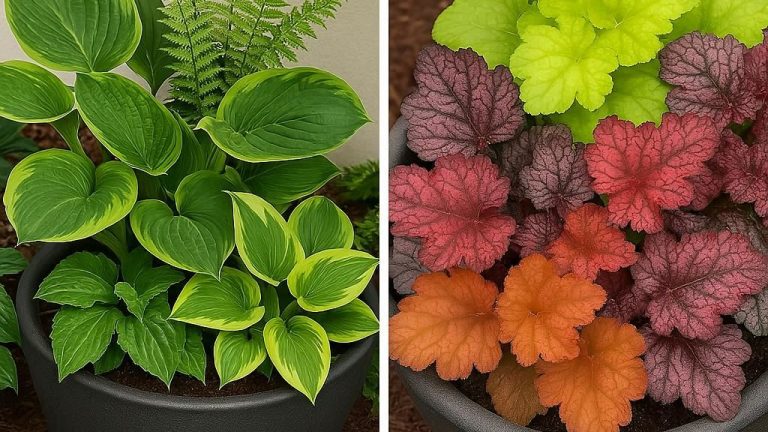
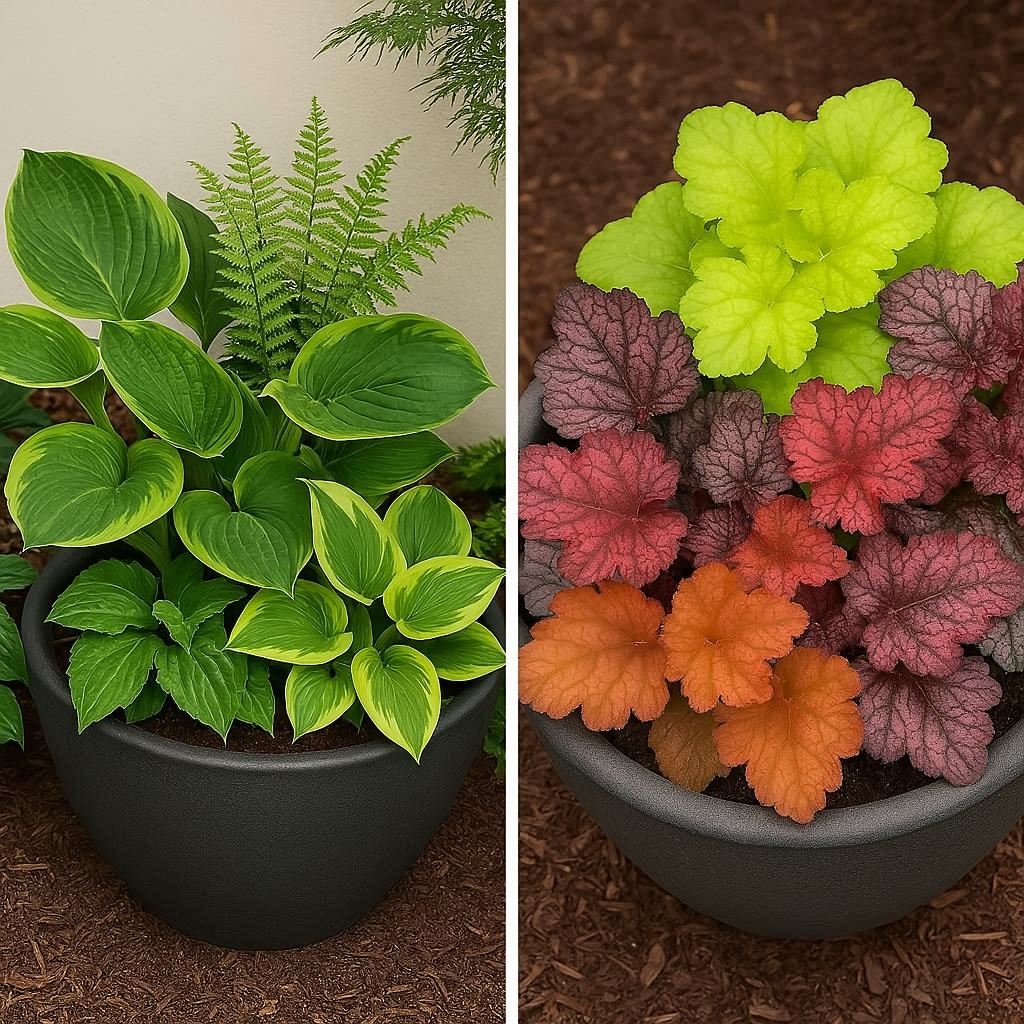
- Hostas: Known for their lush foliage and variety of leaf colors, hostas thrive in partial to full shade.
- Ferns: Perfect for softening container edges and creating a woodland feel. Varieties like Boston ferns and maidenhair ferns do well in indirect light.
- Heucheras (Coral Bells): Offer vibrant foliage in shades of purple, bronze, and green, adding color and contrast.
- Impatiens: Provide bright, long-lasting blooms in shady areas, ideal for adding seasonal color.
- Begonias: Tolerant of low light, with interesting leaves and delicate flowers.
- Astilbes: Produce feathery flower plumes and thrive in consistently moist soil in shade.
- Caladiums: Known for striking, colorful leaves, perfect for adding a tropical feel to shady containers.
- Torenia and Bacopa: Trailing annuals that spill beautifully over container edges, adding a cascading effect.
By mixing foliage and flowering plants, you can create containers that look full and vibrant even in low-light areas.
5. Combining Plants for Visual Interest
Layering plants with different heights, textures, and colors adds depth and dimension:
- Thriller, Filler, Spiller Concept:
- Thriller: A tall, eye-catching plant in the center or back of the container, e.g., a fern or hosta.
- Filler: Medium-height plants that fill gaps, e.g., heucheras or begonias.
- Spiller: Trailing plants that cascade over the edges, e.g., bacopa or torenia.
- Mix Leaf Textures: Combine smooth, ruffled, and variegated leaves to add visual interest.
- Color Contrasts: Use foliage colors and blooms to create focal points in shaded containers.
6. Seasonal Color and Texture
Even shady container gardens can have year-round appeal:
- Spring: Plant bulbs like snowdrops and hellebores for early blooms.
- Summer: Impatiens, begonias, and ferns provide lush foliage and colorful flowers.
- Fall: Heucheras and astilbes offer rich autumn tones.
- Winter: Evergreen ferns and hostas maintain structure and greenery.
Adding seasonal interest ensures your shady container garden remains attractive throughout the year.
7. Maintenance Tips for Shady Containers
Shade gardens require specific care to thrive:
- Watering: Shaded containers often retain moisture longer, so check soil regularly to avoid overwatering.
- Fertilizing: Use a balanced, slow-release fertilizer to maintain healthy growth.
- Pruning: Remove dead leaves and spent flowers to keep plants tidy and prevent disease.
- Pest Management: Shade can encourage slugs and snails; use organic repellents as needed.
- Soil Refresh: Replenish potting mix annually to ensure adequate nutrients and drainage.
8. Creative Design Ideas and Arrangements
Enhance your shady containers with creative touches:
- Layered Heights: Place containers at different heights using plant stands or shelving for a dynamic display.
- Grouping Pots: Cluster multiple pots with complementary plants for a mini garden effect.
- Hanging Containers: Trailing plants in hanging baskets add vertical interest.
- Themed Gardens: Create shade-themed designs such as woodland, tropical, or cottage-style container gardens.
- Decorative Accents: Add stones, garden figurines, or small water features for extra charm.
9. Conclusion
Shady areas don’t have to be dull. With the right plants, thoughtful container choices, and creative design strategies, you can transform even the shadiest corners into lush, vibrant container gardens. By combining foliage and flowering plants, layering textures, and maintaining your containers carefully, your shady garden spaces can become a peaceful and visually appealing retreat for relaxation and enjoyment.