Table of Contents
- Introduction
- Benefits of Self-Watering Containers
- Choosing the Right Containers
- DIY Self-Watering Systems
- Using Wicking Materials and Reservoirs
- Plant Selection for Self-Watering Containers
- Creative DIY Container Ideas
- Maintenance and Troubleshooting
- Conclusion
1. Introduction
Container gardening is an excellent way to grow plants in small spaces, balconies, patios, or urban settings. One of the biggest challenges for container gardeners is keeping plants consistently hydrated without overwatering or frequent maintenance. DIY self-watering container solutions offer an efficient and sustainable way to keep plants healthy while saving time and water. With creativity and simple materials, you can design self-watering systems that are both practical and visually appealing.
2. Benefits of Self-Watering Containers
Self-watering containers provide several advantages for gardeners:
- Consistent Moisture: Plants receive water gradually, reducing the risk of under or overwatering.
- Reduced Maintenance: Ideal for busy gardeners or those with frequent travel schedules.
- Water Conservation: Reservoirs minimize water waste through slow absorption.
- Healthier Plants: Stable moisture promotes strong root growth and vibrant foliage.
Using self-watering containers can make gardening easier and more enjoyable, especially for vegetables, herbs, and flowers that thrive with consistent moisture.
3. Choosing the Right Containers
Selecting the proper container is crucial for a successful self-watering system:
- Size: Choose containers that match the plant’s root depth and spread.
- Material: Plastic, ceramic, and metal containers are all options, but plastic retains moisture longer.
- Drainage: Ensure your container can accommodate a water reservoir without flooding the roots.
- Shape: Tall containers work well for deep-rooted plants, while wide shallow containers are better for leafy vegetables or flowers.
4. DIY Self-Watering Systems
There are multiple approaches to creating your own self-watering containers:
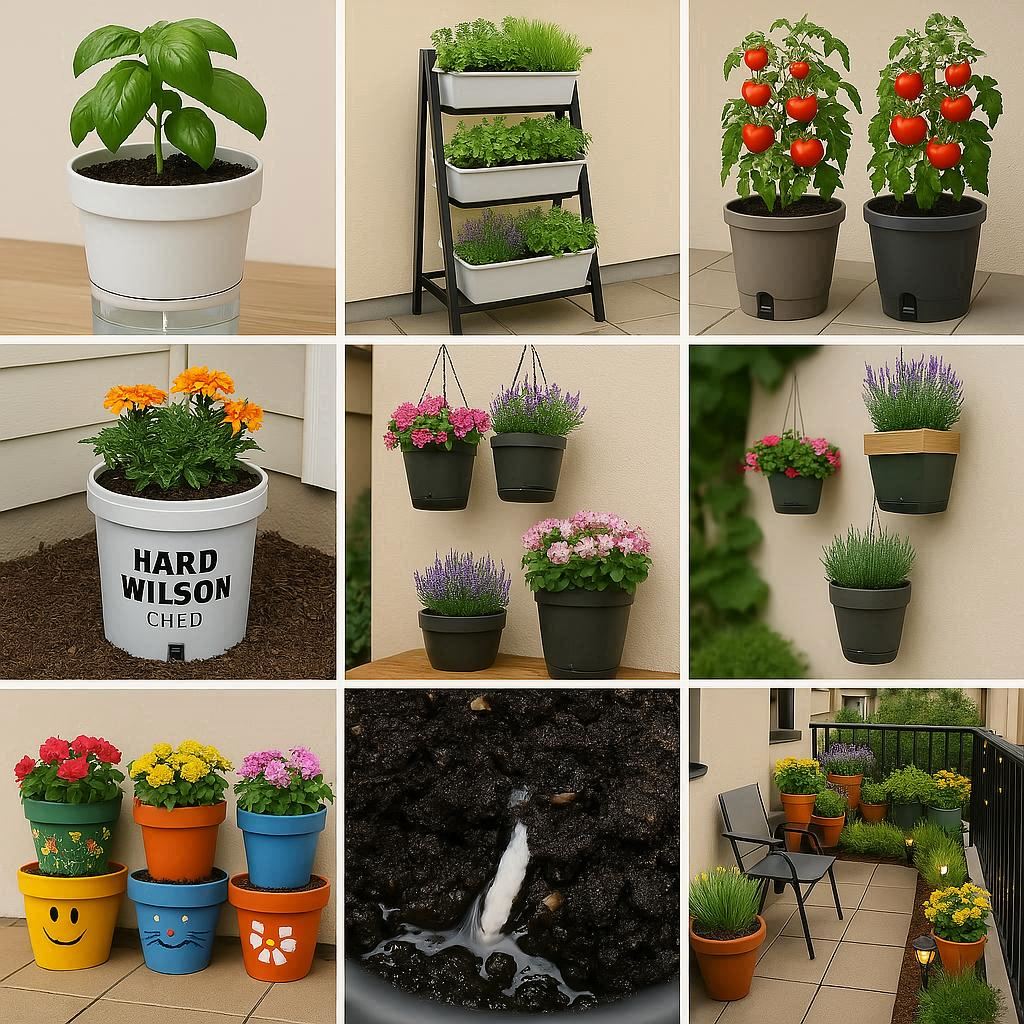
- Two-Pot System: Place a smaller pot with holes inside a larger container holding water. Roots grow downward to access moisture.
- Reservoir with Wick: Use a cotton rope or strip of fabric to draw water from a bottom reservoir into the soil above.
- Bottle or Jar Drip System: Invert a water bottle or jar with small holes and let water slowly seep into the soil.
- Recycled Materials: Old soda bottles, milk jugs, or food containers can be repurposed as water reservoirs.
DIY self-watering systems are flexible, allowing customization for plant type, container size, and water frequency.
5. Using Wicking Materials and Reservoirs
Wicking materials are essential for evenly distributing water:
- Cotton or Nylon Rope: Ideal for drawing water from a reservoir to the soil.
- Felt or Fabric Strips: Can be laid under the soil for larger containers.
- Soil Mix: Combine potting soil with perlite or vermiculite to improve water absorption.
- Reservoir Placement: Keep the reservoir below the soil level to ensure gravity-assisted watering.
This combination of wick and reservoir ensures your plants receive the right amount of water without manual intervention.
6. Plant Selection for Self-Watering Containers
Some plants thrive better in self-watering systems:
- Vegetables: Tomatoes, peppers, lettuce, and herbs like basil or parsley.
- Flowers: Petunias, begonias, impatiens, and geraniums.
- Succulents: Require smaller reservoirs and careful soil mix to avoid root rot.
- Mixing Plants: Combine deep-rooted and shallow-rooted plants carefully to avoid competition for water.
Choosing the right plants ensures a healthy, low-maintenance container garden that flourishes with minimal effort.
7. Creative DIY Container Ideas
Enhance both function and aesthetics with creative containers:
- Recycled Containers: Use wooden crates, metal buckets, or ceramic pots for a rustic or modern look.
- Vertical Gardens: Stack self-watering containers or use hanging pots for small spaces.
- Themed Gardens: Herb gardens, salad containers, or flower assortments in coordinated colors.
- Decorative Reservoirs: Hide water reservoirs under decorative stones or in painted containers for a stylish appearance.
These ideas combine practicality with visual appeal, making your self-watering containers a focal point of your backyard or balcony.
8. Maintenance and Troubleshooting
Even self-watering systems require occasional attention:
- Check Reservoir Levels: Ensure reservoirs do not dry out, especially in hot weather.
- Inspect Wicks: Replace or adjust wicking materials as they wear out.
- Soil Health: Replenish nutrients regularly using slow-release or liquid fertilizers.
- Monitor for Pests: Standing water can attract mosquitoes, so cover reservoirs if necessary.
Regular maintenance ensures your DIY self-watering containers continue performing effectively and keep your plants thriving.
9. Conclusion
DIY self-watering container gardening is an efficient, sustainable, and visually appealing solution for small spaces. By selecting the right containers, using simple reservoirs and wicks, and choosing compatible plants, gardeners can enjoy thriving plants with minimal effort. Creative designs and low-cost materials make it easy to build a personalized container garden that conserves water and enhances outdoor or indoor spaces. Whether growing herbs, vegetables, or decorative flowers, self-watering containers offer a smart way to simplify gardening while maximizing plant health.