Table of Contents
- Introduction
- Assess Your Space
- Define Your Garden Goals
- Measure and Sketch Your Backyard
- Choose Your Garden Zones
- Select Plants and Features
- Add Pathways and Hardscaping
- Create a Color and Texture Plan
- Review and Adjust Your Layout
- Conclusion
1. Introduction
Planning your backyard garden starts with a well-thought-out layout. A garden layout plan helps you maximize space, balance aesthetics and functionality, and ensure that each plant and feature thrives. By creating a visual guide before you start planting, you can avoid costly mistakes and design a beautiful, organized outdoor space that suits your lifestyle.
2. Assess Your Space
Start by observing your backyard to understand the conditions and opportunities:
- Sunlight Exposure: Identify areas with full sun, partial shade, and full shade.
- Soil Type: Note whether the soil is sandy, clay, or loamy, which will affect plant choices.
- Existing Structures: Include fences, trees, sheds, and patios.
- Drainage Patterns: Check for water pooling or slopes that may influence plant placement.
3. Define Your Garden Goals
Ask yourself what you want your garden to achieve:
- Decorative or Functional: Do you want flowers, edible plants, or a combination?
- Entertainment Spaces: Include patios, seating areas, or fire pits if desired.
- Wildlife-Friendly Areas: Consider attracting birds, bees, or butterflies.
- Low-Maintenance Zones: Decide which areas should require minimal upkeep.
4. Measure and Sketch Your Backyard
Accurate measurements are crucial for a realistic layout:
- Measure the Perimeter: Record the width and length of your backyard.
- Note Fixed Features: Include trees, sheds, pathways, and fences in your sketch.
- Scale Drawing: Use graph paper or digital tools to create a scaled representation.
- Sketch Basic Shapes: Start with rectangles, circles, or triangles for different areas.
5. Choose Your Garden Zones
Divide your backyard into functional zones:
- Flower Beds: Group flowers by sunlight and maintenance needs.
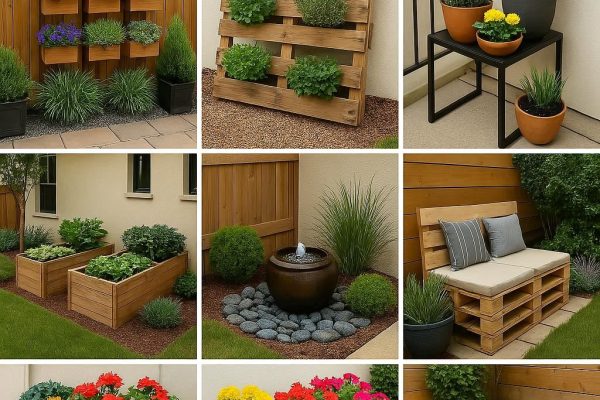
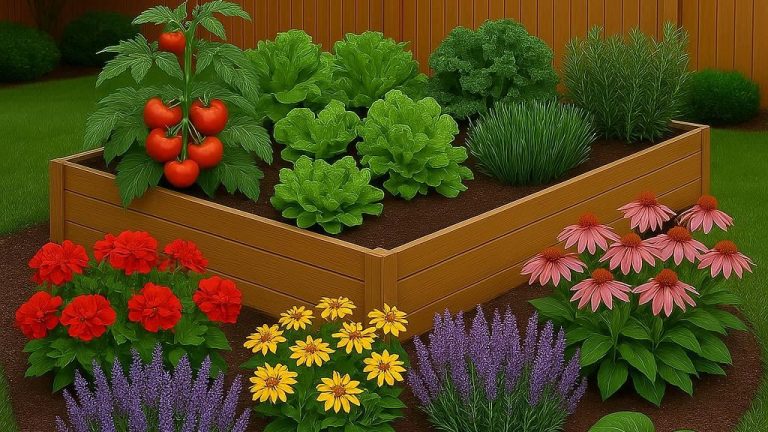
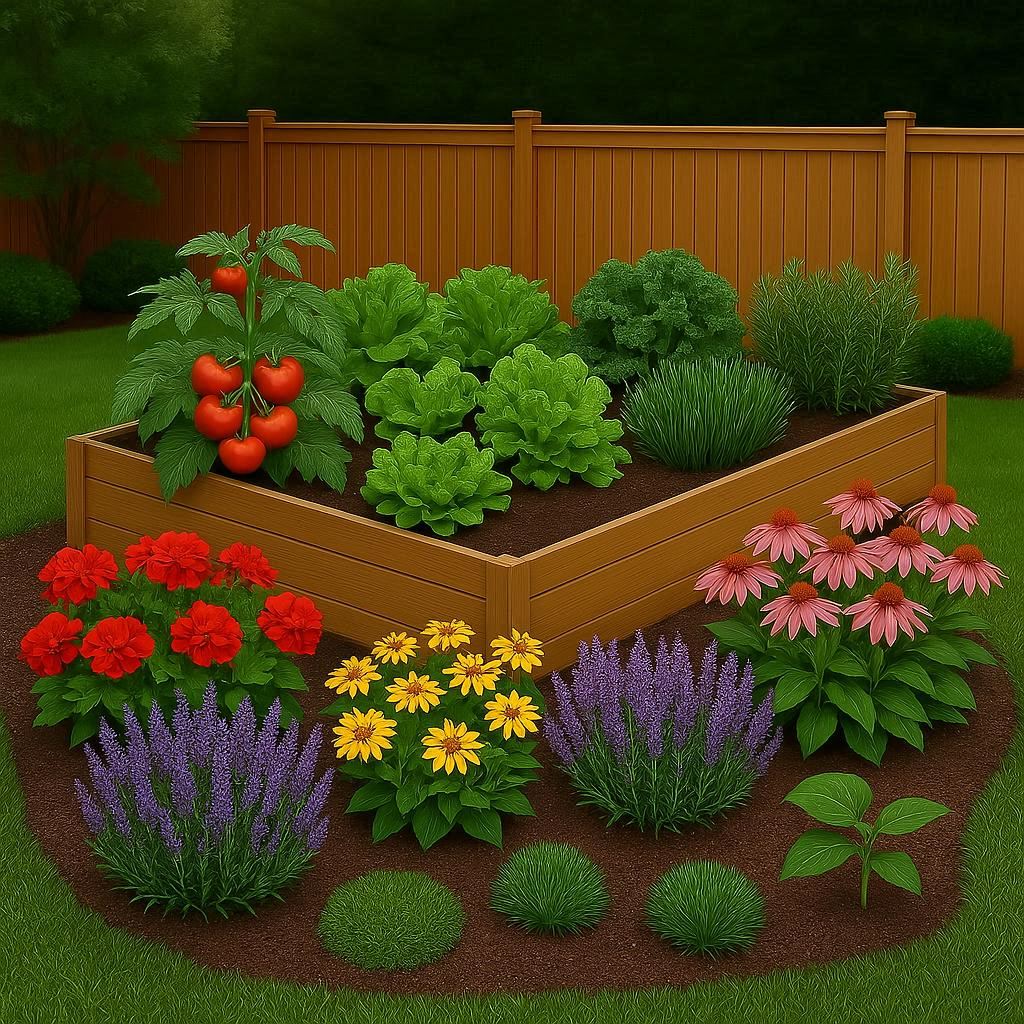
- Vegetable or Herb Garden: Plan raised beds or sections for edible plants.
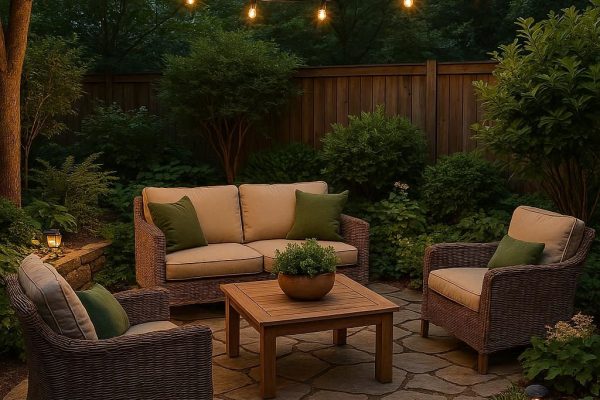
- Relaxation Area: Include benches, swings, or a small patio for outdoor enjoyment.
- Play Area: If you have children, designate a safe space for play structures.
- Water Features or Focal Points: Add ponds, fountains, or sculptures to enhance visual interest.
6. Select Plants and Features
Choose plants that match your goals and climate:
- Sun-Loving Plants: Place in full sun areas. Examples: roses, lavender, sunflowers.
- Shade-Tolerant Plants: Place in partial or full shade areas. Examples: hostas, ferns.
- Edibles: Plan vegetables and herbs in fertile, well-drained areas.
- Seasonal Interest: Include plants that bloom at different times for year-round beauty.
- Trees and Shrubs: Use them for privacy, structure, and shade.
7. Add Pathways and Hardscaping
Pathways and structural elements help organize your garden:
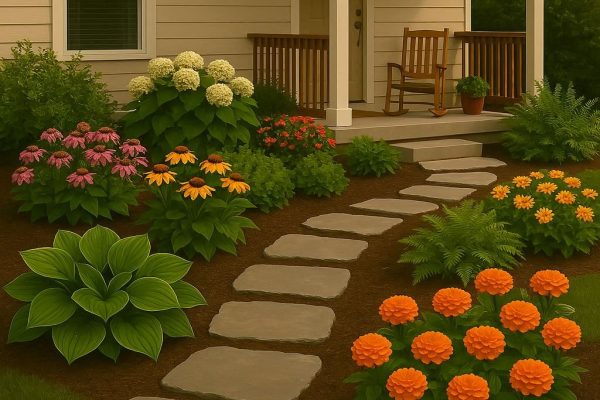
- Paths: Gravel, stone, or mulch paths guide movement and connect areas.
- Patios and Decks: Provide seating or dining spaces.
- Raised Beds: Improve drainage and soil quality while adding structure.
- Garden Edging: Separate zones and add clean lines to the design.
- Decorative Elements: Arbors, trellises, or pergolas create height and visual interest.
8. Create a Color and Texture Plan
Balance colors, shapes, and textures for a harmonious layout:
- Color Schemes: Choose complementary or contrasting colors for flowers and foliage.
- Plant Heights: Place taller plants at the back and shorter ones in front.
- Foliage Texture: Mix broad leaves, fine leaves, and grasses to add depth.
- Seasonal Variety: Incorporate evergreen plants for winter interest.
9. Review and Adjust Your Layout
Before finalizing your plan, evaluate the design:
- Walk Through: Imagine yourself moving through the garden zones.
- Sun and Shade Check: Ensure each plant receives the appropriate light.
- Accessibility: Make sure pathways and seating areas are convenient and safe.
- Flexibility: Leave space for future additions or adjustments.
10. Conclusion
Drawing a garden layout plan for your backyard is an essential step for creating a functional and beautiful outdoor space. By assessing your space, defining goals, sketching zones, choosing plants and features, and considering colors and textures, you can design a garden that is visually pleasing, practical, and sustainable. With careful planning, your backyard can become a personal retreat and a place to enjoy nature throughout the year.