Table of Contents
- Introduction
- What Are Mealybugs?
- Common Signs of Mealybug Infestation
- Plants Most Susceptible to Mealybugs
- Methods for Identifying Mealybugs
- Natural and DIY Remedies
- Chemical Treatments and Considerations
- Preventive Measures
- Maintaining Plant Health After Infestation
- Conclusion
1. Introduction
Mealybugs are one of the most common pests that affect houseplants. Their small, white, cotton-like appearance can make them tricky to detect until the infestation becomes severe. These pests not only weaken plants by feeding on sap, but they also excrete honeydew, which can lead to mold growth. Learning to identify and eliminate mealybugs promptly is essential for maintaining healthy houseplants and ensuring your indoor garden thrives.
2. What Are Mealybugs?
Mealybugs are soft-bodied insects that belong to the family Pseudococcidae. They are typically white or off-white, covered with a powdery wax that protects them from predators and environmental hazards. They reproduce rapidly and can spread easily from one plant to another. Understanding their life cycle, which includes egg, nymph, and adult stages, helps gardeners target them effectively.
3. Common Signs of Mealybug Infestation
Recognizing mealybug activity early is critical. Look for these common signs:
- White, cottony clusters on stems, leaves, and in leaf axils.
- Sticky residue (honeydew) on plant surfaces or nearby areas.
- Yellowing or wilting leaves due to sap loss.
- Stunted growth or leaf drop in severe infestations.
- Presence of ants, which are attracted to the honeydew secretions.
4. Plants Most Susceptible to Mealybugs
While mealybugs can infest many types of houseplants, some are more prone to attack:
- Succulents like Jade plants and Aloe Vera.
- Orchids and African Violets.
- Ficus, Hibiscus, and other tropical indoor plants.
- Indoor herbs and decorative foliage plants.
Identifying which plants are most at risk helps prioritize monitoring and preventive care.
5. Methods for Identifying Mealybugs
Accurate identification ensures appropriate treatment. Effective methods include:
- Visual Inspection: Examine leaves, stems, and leaf axils for white cotton-like masses.
- Magnifying Glass: A magnifier can reveal tiny nymphs and adult mealybugs.
- Sticky Traps: Yellow sticky traps placed near affected plants can help detect movement.
- Monitoring Nearby Plants: Check surrounding plants regularly to prevent spread.
Early detection is key, as mealybugs can multiply quickly and infest multiple plants within weeks.
6. Natural and DIY Remedies
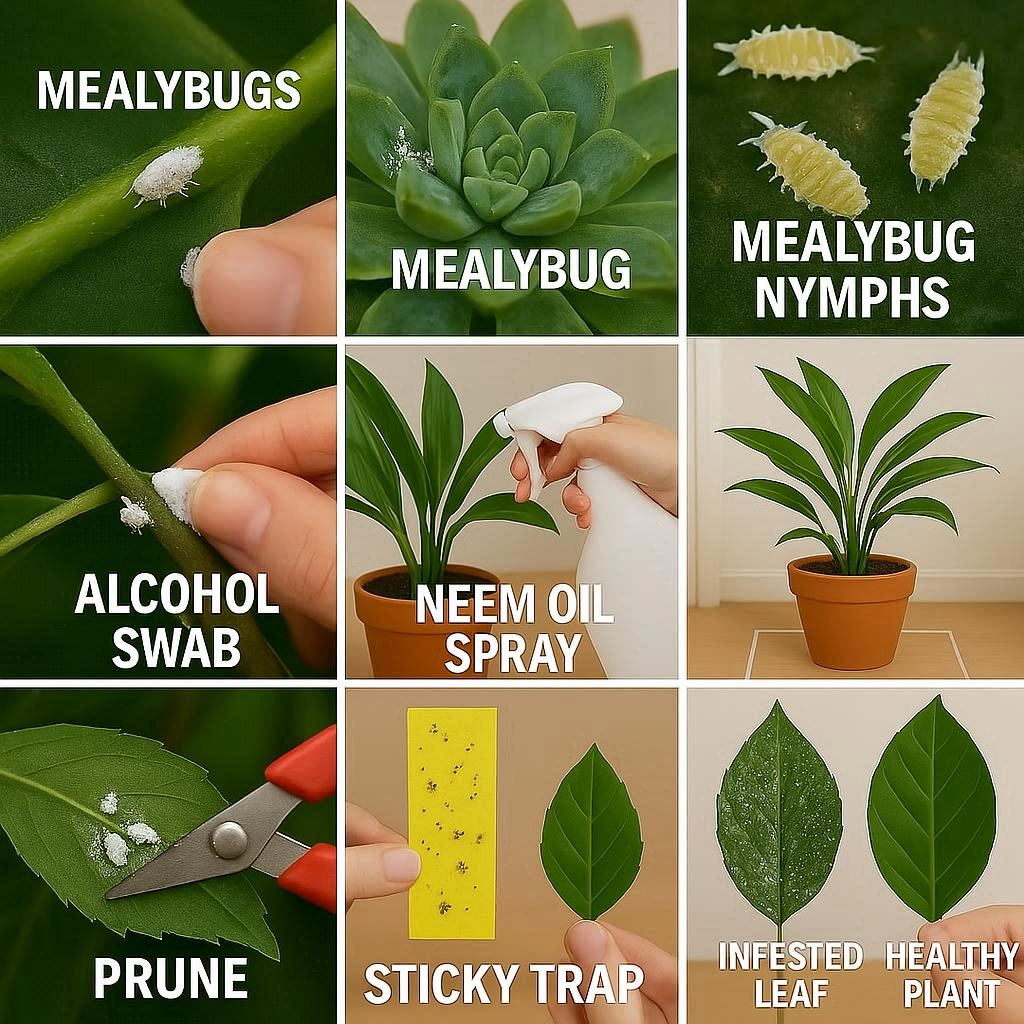
Several natural remedies are effective against mealybugs, especially in the early stages:
- Rubbing Alcohol: Dip a cotton swab in 70% isopropyl alcohol and apply directly to mealybugs.
- Neem Oil Spray: A mixture of neem oil, mild soap, and water helps suffocate mealybugs.
- Insecticidal Soap: Spraying a safe, plant-friendly soap solution can reduce infestations.
- Manual Removal: Gently wipe or prune affected areas to remove mealybugs physically.
- Beneficial Insects: Ladybugs and lacewings feed on mealybugs and can help control populations naturally.
7. Chemical Treatments and Considerations
For severe infestations, chemical pesticides may be necessary, but careful use is important:
- Select products labeled for indoor use on houseplants.
- Avoid systemic insecticides on edible plants unless approved.
- Follow the instructions carefully, including dosage and application frequency.
- Isolate treated plants to prevent pesticide drift to other indoor plants.
Combining chemical treatments with natural methods often provides the best results while minimizing harm to the environment and beneficial insects.
8. Preventive Measures
Preventing mealybugs is more effective than treating a large infestation:
- Quarantine new plants for a few weeks before introducing them to your collection.
- Inspect plants regularly for early signs of pests.
- Avoid over-fertilization, which can make plants more attractive to mealybugs.
- Keep humidity and airflow balanced to create less favorable conditions for pests.
- Clean plant leaves and surrounding areas regularly to remove eggs and nymphs.
9. Maintaining Plant Health After Infestation
After eliminating mealybugs, proper care is essential to restore plant health:
- Repot affected plants if roots were infested, using fresh soil.
- Prune damaged leaves and stems to promote new growth.
- Continue monitoring for any signs of reinfestation.
- Apply a mild fertilizer to help plants recover strength.
- Maintain a regular watering and care schedule to reduce plant stress.
10. Conclusion
Mealybugs may seem harmless at first, but left unchecked, they can seriously damage houseplants. Early identification, combined with effective DIY or chemical treatments and preventive measures, ensures healthy and thriving indoor plants. Regular monitoring and proper plant care help create a pest-resistant environment, making your indoor garden a vibrant and enjoyable space.