Table of Contents
- Introduction
- Assessing Your Small Front Yard Space
- Planning Your Garden Layout
- Choosing Plants for Small Front Yards
- Creating Functional Zones
- Using Vertical and Layered Planting
- Adding Decorative Features
- Lighting and Pathways
- Maintenance Tips
- Conclusion
1. Introduction
A small front yard can be transformed into a beautiful, welcoming space with careful planning and creativity. Even limited spaces can showcase vibrant plants, functional layouts, and stylish decorative elements. Small front yard gardens not only improve curb appeal but also create an inviting atmosphere for family and visitors. With budget-friendly strategies and smart design choices, you can make your front yard both functional and aesthetically pleasing.
2. Assessing Your Small Front Yard Space
Before starting any design project, understand your space:
- Measure Your Yard: Determine the dimensions, slopes, and existing structures.
- Observe Sunlight and Shade: Track sun patterns to select plants that thrive in your yard.
- Identify Problem Areas: Note spots with poor drainage, high traffic, or limited soil.
- Determine Your Priorities: Decide if you want more greenery, flowers, functional pathways, or a mix of both.
3. Planning Your Garden Layout
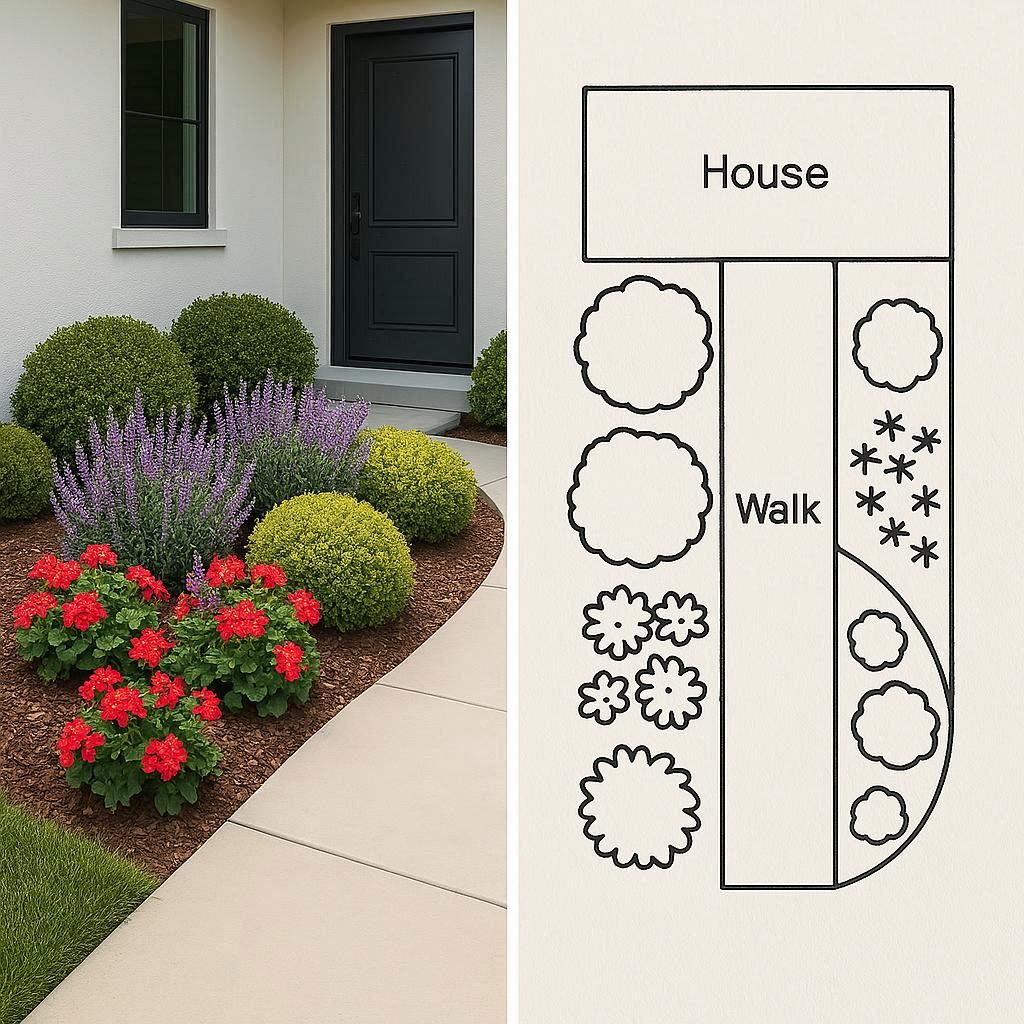
A well-thought layout maximizes your limited space:
- Focal Points: Choose one or two key elements such as a small tree, a water feature, or a sculptural planter.
- Symmetry vs. Asymmetry: Symmetrical layouts can make small yards feel organized, while asymmetrical designs add a modern touch.
- Pathways and Flow: Ensure easy access to the house, driveway, and garden areas.
- Layering: Use different heights for plants to create depth and dimension in a small area.
4. Choosing Plants for Small Front Yards
Plant selection is crucial for space efficiency:
- Low-Maintenance Plants: Choose perennials and shrubs that require minimal care.
- Seasonal Interest: Incorporate flowering plants, evergreen shrubs, and foliage with varying colors.
- Compact Trees: Small or dwarf trees provide shade and structure without overwhelming the yard.
- Native Plants: Locally adapted species reduce watering needs and support wildlife.
5. Creating Functional Zones
Even a small front yard can have functional areas:
- Mini Seating Areas: Add a small bench or chair for morning coffee or relaxation.
- Decorative Plant Beds: Group flowers and shrubs in defined borders to prevent clutter.
- Multi-Use Spaces: A small lawn can double as a play area or a welcoming green carpet.
- Container Gardens: Moveable pots add versatility and color while saving space.
6. Using Vertical and Layered Planting
Vertical planting makes small spaces feel larger:
- Trellises and Arbors: Train climbing plants like vines or roses to grow upwards.
- Hanging Planters: Add greenery without taking up ground space.
- Wall Gardens: Attach planters to fences or exterior walls for a lush backdrop.
- Layered Planting: Place taller plants in the back, medium ones in the middle, and low-growing ground cover in front.
7. Adding Decorative Features
Small details can enhance your garden’s charm:
- Garden Sculptures: Small statues or ornaments create points of interest.
- Bird Baths and Feeders: Invite wildlife and add movement to the space.
- Colorful Pots: Use pots to introduce seasonal colors and textures.
- Mini Water Features: Small fountains or ponds add tranquility and style.
8. Lighting and Pathways
Proper lighting and walkways improve both aesthetics and safety:
- Solar Lights: Energy-efficient and easy to install along pathways or around plant beds.
- String Lights or Lanterns: Add a cozy, welcoming atmosphere.
- Stepping Stones or Gravel Paths: Define walking areas without taking up too much space.
- Highlight Focal Points: Use spotlights to accentuate a tree, sculpture, or flower bed.
9. Maintenance Tips
Keep your small front yard looking its best:
- Regular Pruning: Maintain plant shapes and prevent overgrowth.
- Mulching: Retain moisture and reduce weeds in garden beds.
- Seasonal Planting: Rotate flowers to maintain color and interest throughout the year.
- Watering Routine: Install drip irrigation or self-watering containers for efficiency.
10. Conclusion
A small front yard offers endless design possibilities despite space limitations. Thoughtful layout, strategic plant selection, vertical and layered planting, and creative decorative features can transform a modest yard into a vibrant, welcoming space. By incorporating functional zones, proper lighting, and regular maintenance, your small front yard will not only enhance your home’s curb appeal but also provide a peaceful and charming outdoor retreat.


