Table of Contents
- Introduction
- Common Signs of Plant Problems
- Yellow Leaves on Plants – Causes & Fixes
- Common Plant Diseases and How to Treat Them
- Organic Pest Control Methods
- Plant Fungus Treatment: Natural and Chemical Options
- How to Revive Dying Plants Step by Step
- Preventing Future Plant Problems
- Final Thoughts
1. Introduction
Every gardener, whether beginner or experienced, will face plant problems at some point. From yellowing leaves to fungal spots, pests, and wilting stems, identifying the issue early is the key to saving your plants. This guide will walk you through the most common plant problems, their causes, and practical solutions.
By understanding how to diagnose plant problems and apply both natural and chemical treatments, you’ll keep your garden thriving year-round.
2. Common Signs of Plant Problems
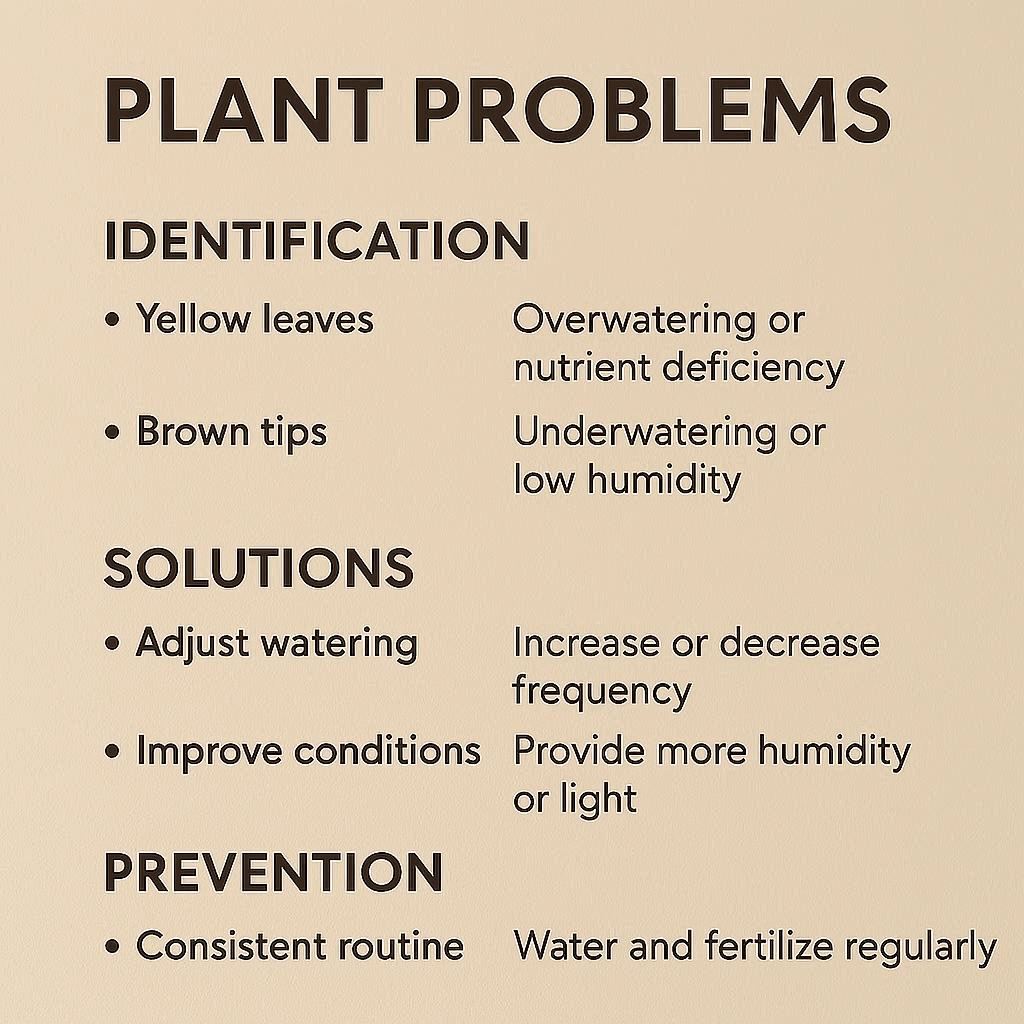
Before jumping to treatments, you need to recognize the early warning signs. Look out for:
- Yellow leaves → nutrient deficiency or water imbalance.
- Brown tips → over-fertilization or dry air.
- Spots or powdery coating → fungal disease.
- Chewed leaves → insect damage.
- Wilting → root rot or lack of water.
Tip: Always inspect both the top and underside of leaves, as pests often hide underneath.
3. Yellow Leaves on Plants – Causes & Fixes
One of the most searched gardening issues is “yellow leaves on plants”. Here are the main reasons and solutions:
- Overwatering → Roots suffocate; reduce watering and check drainage.
- Underwatering → Leaves dry and curl; increase watering frequency.
- Nutrient deficiency → Add fertilizer rich in nitrogen, iron, or magnesium.
- Poor light → Move the plant to a brighter spot.
4. Common Plant Diseases and How to Treat Them
Powdery Mildew
- Symptoms: White powdery coating on leaves.
- Solution: Spray with a mix of water and baking soda or neem oil.
Root Rot
- Symptoms: Wilting even when watered; roots appear brown and mushy.
- Solution: Remove affected roots, repot in fresh soil with good drainage.
Leaf Spot Disease
- Symptoms: Black or brown spots spreading on leaves.
- Solution: Prune affected leaves, apply copper-based fungicide.
5. Organic Pest Control Methods
Chemical pesticides may harm beneficial insects and soil health. Instead, try these organic pest control methods:
- Neem Oil Spray → Works against aphids, spider mites, and whiteflies.
- Soap & Water Solution → Kills soft-bodied insects.
- Companion Planting → Marigolds deter nematodes; basil repels mosquitoes.
- Beneficial Insects → Ladybugs eat aphids; lacewings target caterpillars.
6. Plant Fungus Treatment: Natural and Chemical Options
Fungal infections spread quickly if untreated. Here’s how to manage them:
- Natural Remedies:
- Cinnamon powder sprinkled on soil prevents fungus.
- Chamomile tea spray reduces damping-off in seedlings.
- Chemical Treatments:
- Sulfur or copper fungicides for stubborn cases.
Remember: Always treat early to prevent fungal spores from spreading.
7. How to Revive Dying Plants Step by Step
Sometimes plants look hopeless—but many can be saved. Follow this how-to revive dying plants guide:
- Check for life → Scratch the stem; if green inside, it’s still alive.
- Trim dead parts → Remove brown leaves and stems.
- Repot if root-bound → Use fresh, nutrient-rich soil.
- Adjust watering → Balance between soggy and dry.
- Boost nutrients → Add slow-release fertilizer or compost tea.
8. Preventing Future Plant Problems
An ounce of prevention is worth a pound of cure. To reduce future problems:
- Rotate crops annually to avoid soil-borne diseases.
- Ensure proper drainage to prevent root rot.
- Sterilize pruning tools to avoid spreading infections.
- Water at soil level to keep leaves dry.
- Mulch to regulate soil moisture and temperature.
9. Final Thoughts
Dealing with plant problems is a natural part of gardening, but with quick action and the right knowledge, most issues can be resolved. From yellow leaves on plants to organic pest control and plant fungus treatment, these steps will keep your garden green and thriving.
Remember: Healthy plants are more resistant to disease and pests. A little care goes a long way!